Shame in Bronze: The Bribery Scandal That Gave Ancient Greece Its Most Powerful Anti-Corruption Tool
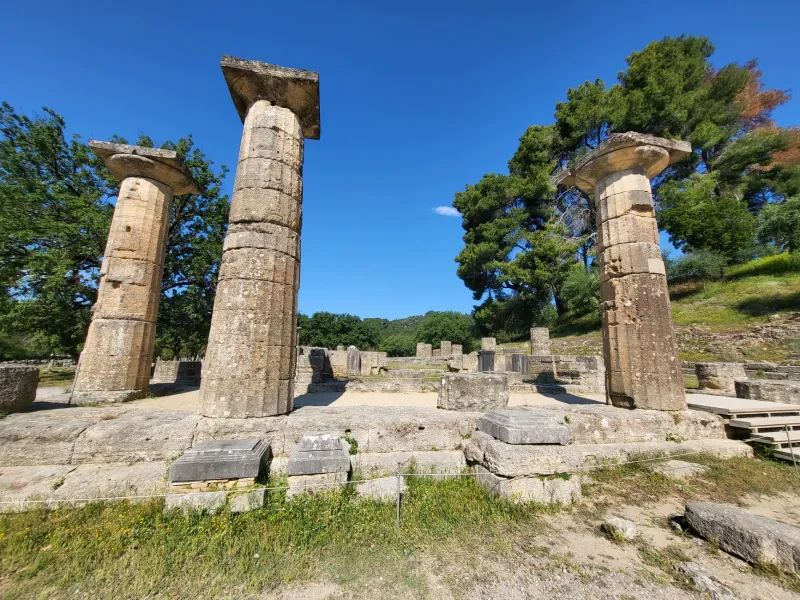
Sports corruption isn't a modern invention. Long before point-shaving scandals rocked college basketball or doping controversies derailed cycling's biggest races, the ancient Greeks were already wrestling with the same uncomfortable truth: where there's competition, there's temptation.
In 388 BC, a boxer named Eupolos of Thessaly decided he didn't want to leave his Olympic fate to fists alone. He bribed three of his opponents — reportedly paying each man to take a dive — and walked away from the Games with a victory wreath he hadn't truly earned. It was one of the first documented cases of athletic corruption in recorded history, and the Greeks' response to it became one of the most enduring anti-cheating mechanisms the sporting world has ever seen.
The Crime That Shook Olympia
The ancient Olympics weren't just a sporting event. They were a sacred religious festival held in honor of Zeus, the king of the gods, at his most important sanctuary on the Greek mainland. To compete at Olympia was to participate in something divine. To cheat there wasn't merely unsportsmanlike — it was blasphemy.
When Eupolos's bribery came to light, the reaction from the Eleans, who administered the Games, was swift and deliberate. Eupolos and the men he'd paid were all fined. But here's where the Greeks did something genuinely brilliant: instead of pocketing the money or routing it into general funds, they used every drachma to commission bronze statues of Zeus.
Those statues — called Zanes, the Doric Greek word for Zeus — were erected along the processional road leading into the Olympic stadium. Every athlete who competed at Olympia for centuries afterward walked past them on the way to the starting line. Each one bore an inscription naming the cheater, describing the offense, and reminding all who passed that Zeus saw everything.
It wasn't just punishment. It was architecture designed to humiliate.
Why Public Shame Was the Point
In ancient Greek culture, honor and reputation weren't personal concerns — they were social currency. A man's standing in his community depended on how others perceived him. Victory at Olympia brought a city-state enormous prestige; defeat was manageable. But disgrace? Disgrace followed a family for generations.
The Greeks understood this deeply, which is why the Zanes were so effective as a deterrent. A fine could be absorbed. Prison — which the Greeks rarely used as punishment — could be endured. But having your name carved into a monument of shame at the most sacred athletic site in the world, visible to every competitor, every spectator, and every pilgrim who visited Olympia for the next several hundred years? That was a sentence with no expiration date.
The Greek travel writer Pausanias, visiting Olympia in the second century AD — roughly 500 years after Eupolos's scandal — recorded seeing at least sixteen of these statues still standing near the stadium entrance. He noted their inscriptions carefully. The cheaters were still being named. The lesson was still being taught.
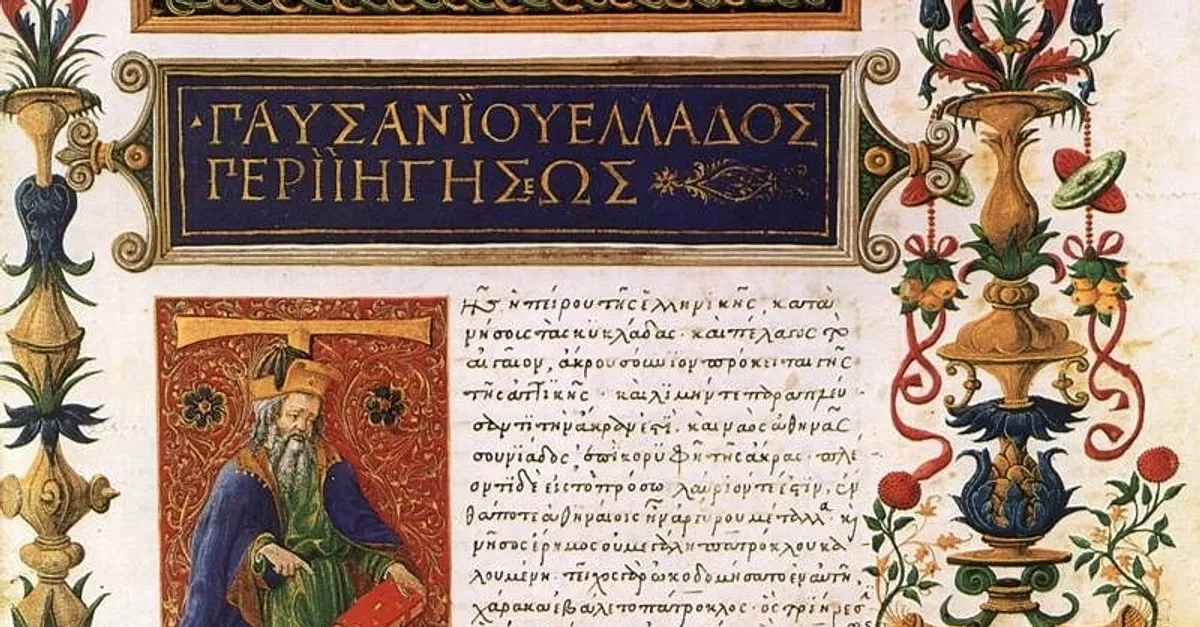 Photo: Pausanias, via www.worldhistory.org
The Scandal That Kept Multiplying
Eupolos's case opened a door the Greeks hadn't fully anticipated. Once the Zanes system was established, it became the standard response to corruption. Over the following centuries, more statues were added as new scandals emerged — athletes who bribed judges, competitors who falsified their city of origin to gain eligibility, and in at least one case, a father who bribed opponents on his son's behalf.
Each new statue reinforced the message. The row grew longer. The walk to the stadium became, for any athlete with a guilty conscience, genuinely uncomfortable.
What's remarkable is how psychologically sophisticated this approach was. The Greeks weren't relying on the threat of punishment alone — they were engineering an environment in which cheating felt impossible to hide. The statues were a constant, physical reminder that the Games had a memory, and that memory was permanent.
From Olympia to the NCAA Infractions Committee
It's tempting to draw a straight line from the Zanes to the way modern sports bodies handle misconduct — and the line is surprisingly direct.
The IOC's public naming of doping violators, the NCAA's published infractions database, the Court of Arbitration for Sport's openly accessible decisions: all of these function on the same basic principle the Greeks figured out in 388 BC. Transparency and public record are deterrents. Shame, wielded deliberately and institutionally, changes behavior.
The United States Anti-Doping Agency publishes a searchable database of sanctioned athletes. The NCAA maintains decades of enforcement records online. The IOC has stripped medals publicly, sometimes years after the fact, when retesting reveals violations. Each of these mechanisms echoes the Zanes: your name, your offense, your permanent record.
Modern sports governance adds layers of due process, appeals, and legal complexity that the Eleans never had to manage — but the philosophical core is identical. Make the punishment visible. Make it last. Make every future competitor aware that the institution remembers.
What the Statues Still Tell Us
The Zanes of Olympia are gone now — lost to the same earthquakes, floods, and centuries of neglect that buried most of the ancient sanctuary. But the inscriptions Pausanias recorded survived in his writings, which means we still know the names. Eupolos of Thessaly is still on the record, more than 2,400 years later.
There's something almost poetic about that. A man who tried to erase the legitimacy of his opponents' efforts ended up more remembered for his dishonesty than any honest champion of his era. The Greeks built a system specifically designed to produce that outcome.
Every time a sports organization today makes a point of announcing a ban publicly, of publishing an athlete's name in an infractions report, of stripping a medal in a press conference rather than quietly behind closed doors — they're working from the same playbook the Eleans wrote in 388 BC.
One boxer's bribe. A row of bronze statues. And a principle that has outlasted every record, every dynasty, and every sports empire that followed.
Some lessons from Olympia travel remarkably well.