Sworn on the Altar, Broken at the Finish Line: Ancient Greece's Losing War Against Cheating
Sworn on the Altar, Broken at the Finish Line: Ancient Greece's Losing War Against Cheating
Before every modern Olympic Games, athletes sign agreements. They submit to drug testing. They stand in front of officials and confirm, under penalty of ban, that they have competed fairly. It feels like a thoroughly modern ritual — a product of the pharmaceutical age and the billion-dollar business of elite sport.
But the impulse behind it is ancient. More than 2,500 years ago, at the sanctuary of Olympia in southern Greece, officials were wrestling with the exact same problem: how do you stop determined athletes from doing whatever it takes to win?
Their answer involved sacred oaths, professional inspectors, public humiliation, and cold hard cash. It was sophisticated, serious, and — ultimately — not enough.
The Oath That Was Supposed to Settle Everything
Every athlete who competed at the ancient Olympic Games was required to swear an oath before the sacred statue of Zeus Horkios — Zeus in his role as enforcer of oaths, depicted holding a thunderbolt in each hand as a reminder of what happened to oath-breakers.
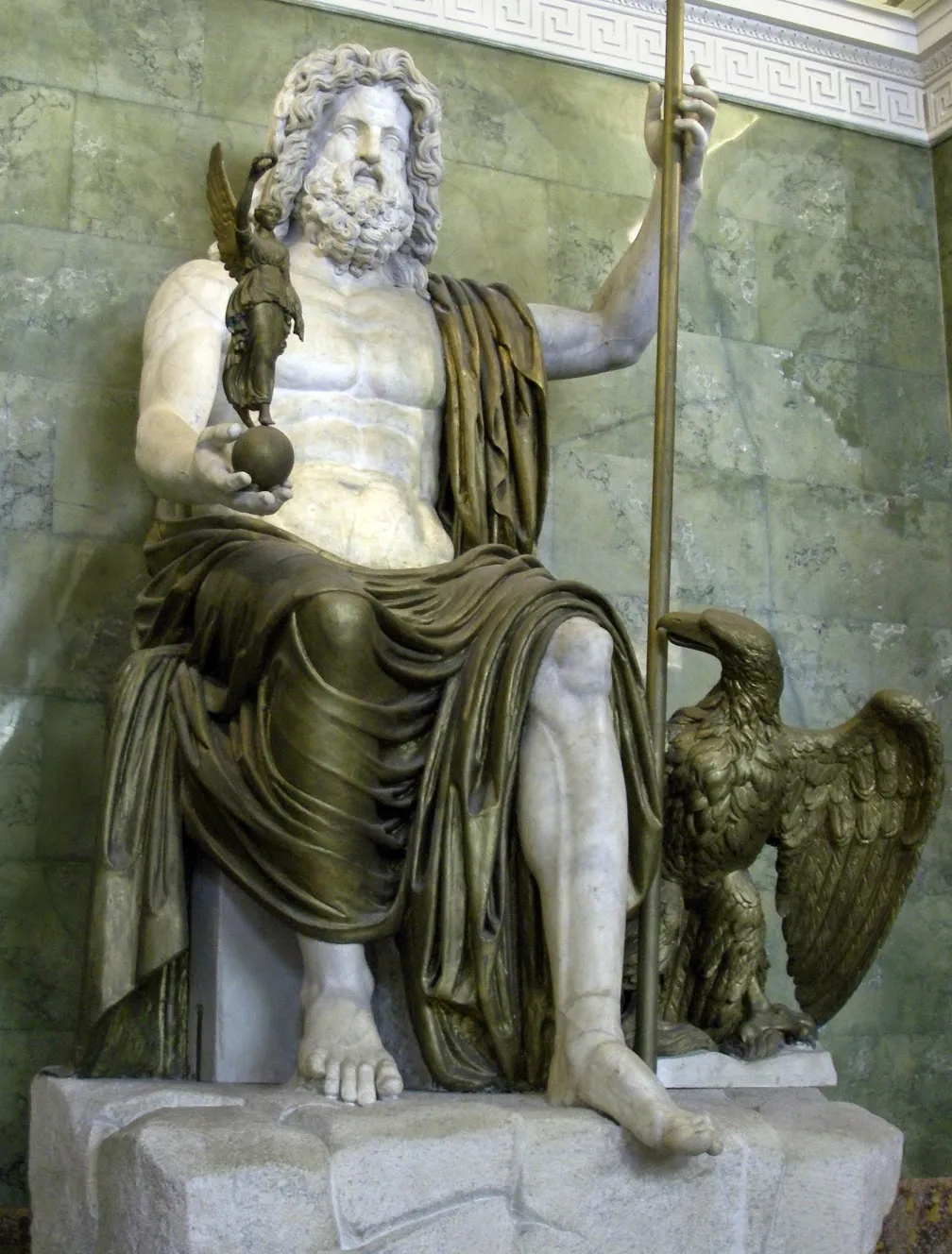 Photo: Zeus Horkios, via 3.bp.blogspot.com
The oath was not a formality. Athletes swore that they had trained for ten full months in preparation for the Games, that they would compete fairly, and that they had not violated any of the rules of the competition. Their fathers and brothers swore alongside them. Trainers took a separate oath confirming they had not coached through illegal means.
The location mattered. Swearing falsely in front of Zeus Horkios wasn't just a legal violation — it was a religious one. The ancient Greeks believed the gods were watching, and that divine punishment awaited anyone who lied at that altar.
For a while, it worked. The early centuries of the ancient Olympics appear to have been largely clean, at least by the standards of the era. The Games were small, the competitors were known to one another, and the community pressure to maintain honor was intense.
Then the stakes got higher. And things got complicated.
When Money Entered the Equation
The ancient Olympics officially offered only an olive wreath as a prize. But any historian will tell you that the real rewards were enormous. Winning city-states showered their champions with cash, free meals for life, front-row seats at public events, and the kind of social status that opened every door in the ancient world.
Sound familiar? It should. The moment significant wealth became attached to athletic victory — whether that's a Greek city-state's cash bonus in 400 BC or an American sneaker contract in 2024 — the pressure to cheat follows almost inevitably.
Ancient sources, including the geographer Pausanias writing in the second century AD, document a series of cheating scandals that rocked the Olympics over the centuries. Bribery was the most common offense. Wrestlers paid opponents to throw matches. Runners allegedly made deals before races. City-states, eager for the prestige of a champion, sometimes funded the corruption directly.
The Zanes: Public Shame Cast in Bronze
The Hellanodikai — the judges of the ancient Olympics — were not powerless. When they caught cheaters, the punishment was memorable.
Financial penalties were levied against offending athletes and their home cities. But the most striking punishment was the Zanes: bronze statues of Zeus, funded entirely by the fines collected from cheaters, erected along the entrance path to the Olympic stadium. Every athlete who entered the Games had to walk past these statues, each one inscribed with the name of the cheater who paid for it and the nature of their offense.
It was public humiliation engineered on a monumental scale. The ancient Greeks understood something modern sports commissioners are still figuring out: the fear of reputational destruction can be a more powerful deterrent than the fear of a fine.
At least in theory.
The System Crumbles
By the later period of the ancient Olympics — particularly after Greece came under Roman influence in the second century BC — the enforcement system was visibly struggling. Roman emperors, including Nero, famously manipulated the Games to guarantee their own victories. Nero entered the chariot race at the 67 AD Olympics, fell off his chariot, failed to finish, and was still declared the winner. The Hellanodikai, apparently, found the situation manageable.
The sacred oath to Zeus no longer carried the weight it once had. The cash rewards were too large, the political pressure too intense, and the gap between the official rules and the actual conduct of competition had grown into a chasm.
The Line From Olympia to the Locker Room
If you're an American sports fan, none of this should be surprising. The history of US athletics is littered with the same structural failure: a system of rules, a set of penalties, and a competitive environment so financially and socially rewarding that a significant number of athletes will always search for the edge that the rules don't yet cover.
The BALCO scandal. Lance Armstrong. The ongoing debates about performance-enhancing substances in the NFL. Each one follows the same ancient script — oath, violation, investigation, punishment, repeat.
What the ancient Greeks understood, and what we keep relearning, is that enforcement mechanisms alone cannot solve a problem rooted in human nature. When winning carries enormous rewards, some competitors will always calculate that the risk of getting caught is worth taking.
The Zanes lined the path into the stadium at Olympia for centuries. Athletes walked past them every four years, read the names of the disgraced, and then — some of them, at least — went looking for a way to avoid getting caught.
We haven't built enough bronze statues to change that math yet.