The Oldest Sport Nobody Can Agree On: Wrestling's Wild Ride From Sacred Sands to the Chopping Block
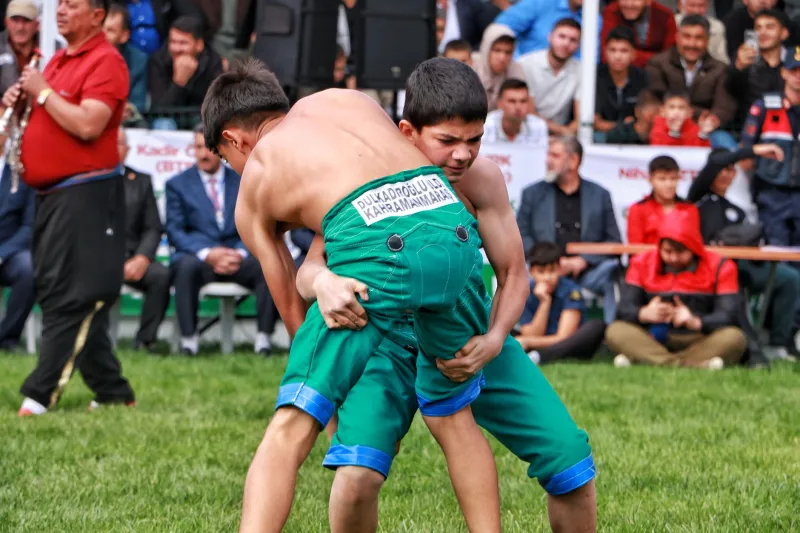
In the spring of 2013, the International Olympic Committee made an announcement that sent shockwaves through the sports world: wrestling — one of the oldest competitive disciplines in human history, a sport that had been part of the ancient Olympics for over a millennium — was being recommended for removal from the modern Games.
The reaction was immediate and global. Wrestlers, coaches, national federations, and sports fans from Iran to Japan to rural Iowa erupted in protest. Within months, the IOC reversed course, reinstating wrestling after a frantic lobbying campaign that united countries that rarely agree on anything.
But the fact that it got that far — that a sport practiced since before recorded history nearly got voted off the Olympic island by a committee of administrators — tells you almost everything you need to know about wrestling's complicated place in the modern sports landscape.
Where It All Started
Wrestling didn't just appear in the ancient Olympics. It was one of the defining events of the Games, introduced as part of the pentathlon in 708 BC and later contested as a standalone event. The Greeks called it pale, and they considered it one of the most complete tests of athletic ability — requiring strength, technique, balance, and the kind of mental composure that separates champions from everyone else.
The rules were simpler than modern wrestling's labyrinthine scoring systems: throw your opponent to the ground three times and you win. No pinning, no points for near-falls or exposure — just three clean takedowns. It sounds straightforward, but the Greeks produced wrestlers of such extraordinary technical sophistication that training manuals from the ancient world describe dozens of specific holds, throws, and counters.
The most famous wrestler in ancient history — and arguably the most celebrated athlete of the entire ancient Olympic era — was Milo of Croton. He won the Olympic wrestling title six times across five different Olympiads, from approximately 540 BC to 516 BC. He also reportedly won at the Pythian, Isthmian, and Nemean Games, the other three major festivals that made up the ancient Greek athletic circuit. By any measure, he was the greatest wrestler who ever lived in the ancient world, and his legend grew so large that stories about him — carrying a bull on his shoulders, eating an entire ox in a single day — became part of Greek mythology.
 Photo: Milo of Croton, via m.media-amazon.com
Wrestling produced heroes. It was a big deal.
The Long Road to Modern Competition
When Pierre de Coubertin revived the Olympics in Athens in 1896, wrestling was part of the program from the start. Greco-Roman wrestling — which prohibits holds below the waist, emphasizing upper-body throws — was included in those first modern Games. Freestyle wrestling, which allows leg attacks and is closer in spirit to the ancient Greek style, was added in 1904.
For most of the twentieth century, wrestling was a stable, respected part of the Olympic program. The Cold War era turned it into a geopolitical battleground, with the United States and the Soviet Union trading dominance across weight classes while countries like Iran, Turkey, and Japan built wrestling cultures that rivaled anything the ancient Greeks produced.
In American high schools and colleges, wrestling became one of the most widely participated-in sports in the country. The NCAA Division I wrestling championships, held every March, drew serious crowds and produced Olympic champions with regularity. Names like Dan Gable — who won the 1972 Olympic gold medal without surrendering a single point during the entire tournament — became legendary figures in American sports culture.
 Photo: Dan Gable, via t4.ftcdn.net
Gable went on to coach at the University of Iowa, where he built a dynasty that won 15 consecutive NCAA team titles between 1978 and 1986. It was, by any reasonable measure, one of the greatest sustained runs of dominance in American collegiate sports history. The ancient Greeks would have recognized it instantly — it had the same structure as Milo of Croton's reign, the same combination of individual brilliance and institutional commitment.
The 2013 Crisis and What It Revealed
So how did a sport with that history end up on the IOC's chopping block?
The short answer is television ratings and spectator appeal. The IOC, under pressure to keep the Games commercially viable, was scrutinizing every sport on the program for global viewership numbers and broadcast revenue potential. Wrestling, despite its participation numbers worldwide, doesn't produce the kind of telegenic moments that drive casual viewership. Matches can be technical and slow. Scoring systems in Greco-Roman and freestyle wrestling are genuinely confusing to non-specialists. And the sport lacks the single iconic moment — the finish-line photo, the perfect dive, the gymnast's stuck landing — that makes for compelling highlight reels.
The IOC's recommendation to drop wrestling in favor of keeping sports like modern pentathlon — which has a tiny global participation base but a more photogenic format — was, at its core, a business decision dressed up as a programming one.
The backlash was ferocious and, ultimately, effective. Iran, which has one of the world's most passionate wrestling cultures and has won multiple Olympic gold medals in the sport, essentially went to diplomatic war over the decision. The United States, Russia, and a coalition of nations that rarely coordinate on anything united behind wrestling's reinstatement. The sport was restored to the Olympic program within months.
But the episode left a mark. It made clear that ancient pedigree and global participation are not, by themselves, sufficient protection in the modern Olympic ecosystem. You also need to be watchable — or at least watchable enough.
From the Mat to the Octagon
Here's the irony that the 2013 crisis highlighted: while Olympic wrestling was fighting for survival in committee rooms, wrestling-derived combat sports were exploding in popularity across America.
Mixed martial arts — which draws heavily on wrestling technique, particularly the takedown and ground-control skills that define collegiate and Olympic wrestling — had become one of the fastest-growing sports in the country. The UFC was filling arenas and generating pay-per-view revenue that dwarfed most traditional sports properties. And a significant percentage of the UFC's elite fighters had backgrounds in high school or college wrestling.
Khabib Nurmagomedov, widely considered one of the greatest MMA fighters of all time, built his entire fighting style on wrestling fundamentals learned in Dagestan, Russia — a region with a wrestling culture that traces directly back to the same Central Asian and Near Eastern traditions that fed into the ancient Greek Games. Daniel Cormier, a two-division UFC champion, was an Olympic-level wrestler before he transitioned to MMA.
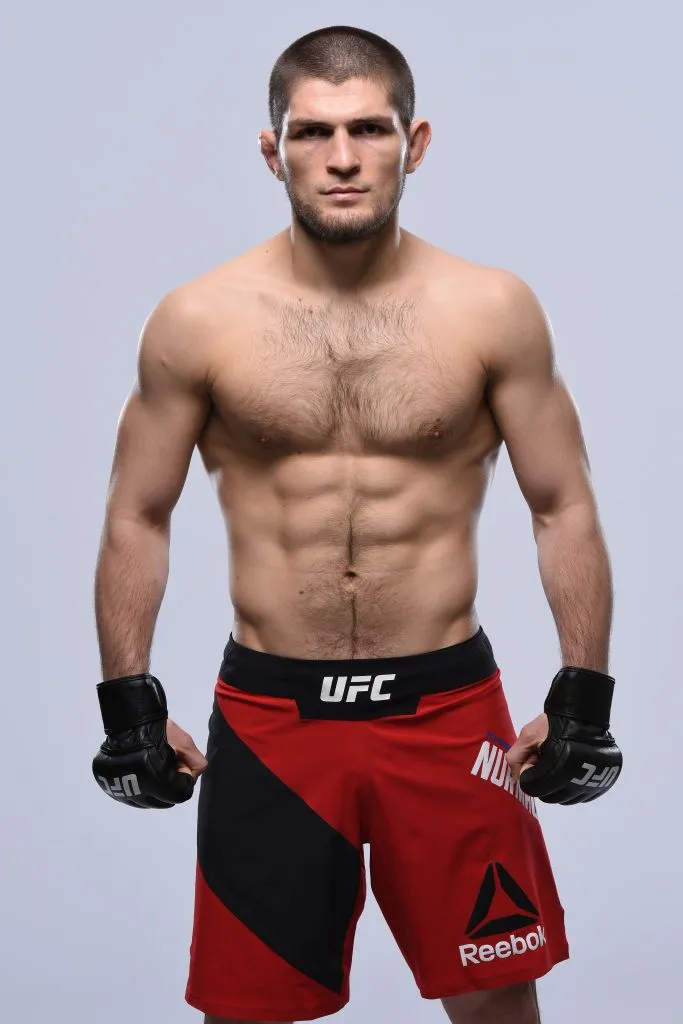 Photo: Khabib Nurmagomedov, via i.pinimg.com
The audience that wasn't watching Olympic wrestling on television was absolutely watching wrestling technique deployed in the octagon, on prime-time cards that drew millions of viewers. The sport hadn't lost its appeal — it had lost its format.
Why It Still Matters
Wrestling's survival on the Olympic program is, in retrospect, one of the more important decisions the IOC has made in recent decades — not because wrestling is more deserving than other sports, but because of what cutting it would have said about the relationship between athletic tradition and commercial calculation.
The ancient Greeks built the Olympics around wrestling because it tested something fundamental about human physical competition. That hasn't changed. What's changed is the media environment around it, and the challenge for wrestling's governing bodies is figuring out how to present a genuinely ancient discipline in a way that connects with twenty-first century audiences.
Some progress has been made — rule changes have made matches faster and higher-scoring, and streaming platforms have given wrestling more distribution than it ever had through traditional broadcast TV.
But the 2013 near-death experience is a reminder that even the oldest sports in the world have to keep earning their place. Milo of Croton won six Olympic titles. That didn't save wrestling from a committee vote 2,500 years later.
From the sacred sands of Olympia to the gymnasiums of Iowa to the edge of extinction and back — wrestling's story is, in its own way, the most Olympic story there is.