The Olympics That Never Were: The Athletes History Forgot When the World Went to War
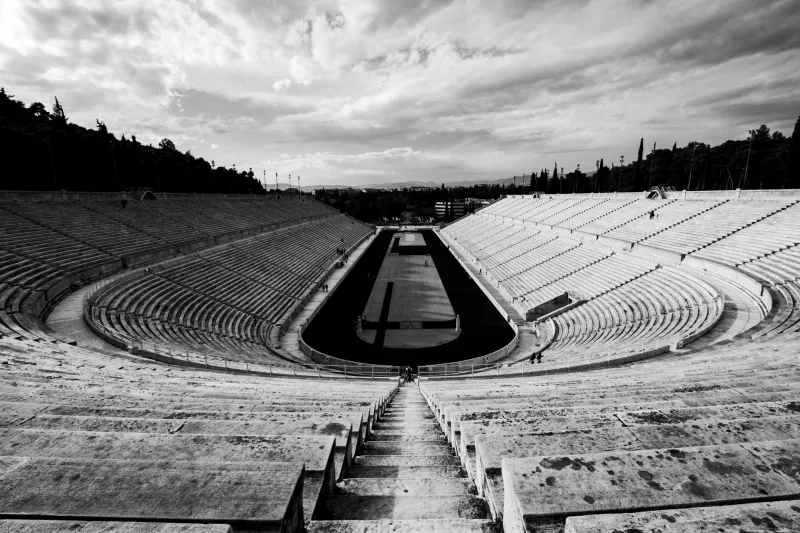
In the summer of 1936, Jesse Owens stood on the podium in Berlin and collected four gold medals while Adolf Hitler watched from the stands. The image became one of the most powerful in sports history — a Black American athlete dismantling Nazi ideology one sprint at a time on German soil.
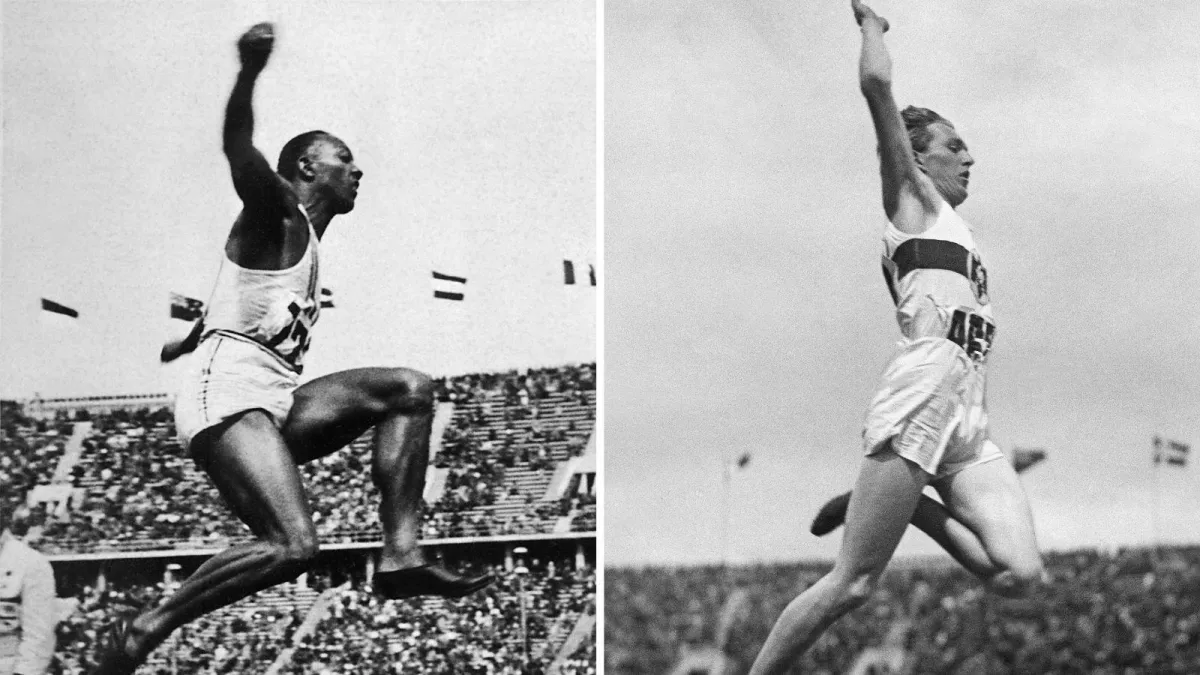 Photo: Jesse Owens, via ichef.bbci.co.uk
What the history books rarely linger on is what came next. Owens was 23 years old. He had, by any reasonable projection, at least one more Olympic cycle in him, possibly two. The 1940 Games were scheduled for Tokyo, then relocated to Helsinki when Japan withdrew. They never happened. Neither did the 1944 Games, planned for London.
Between 1936 and 1948, twelve years passed without an Olympic competition. For the athletes who were at or approaching their peak in 1940 and 1944, that gap wasn't a scheduling inconvenience. It was the erasure of their entire competitive prime.
What Was Supposed to Happen
The 1940 Games had been awarded to Tokyo in 1936, a decision freighted with geopolitical optimism that aged poorly. As Japan's military aggression in China intensified, the International Olympic Committee shifted the event to Helsinki. Finland accepted. Preparations began. Then Germany invaded Poland in September 1939, and the world that had cheered in Berlin three years earlier started shooting at itself.
Helsinki canceled. The 1940 Games were formally abandoned.
Four years later, London was slated to host the 1944 edition. By that point, the city was absorbing German air raids. The idea of staging an international athletic festival in a metropolis under bombardment was not seriously entertained for long. The Games were canceled again.
When the Olympics finally resumed in London in 1948 — the same city that had been scheduled to host four years earlier — the world was unrecognizable. Athletes who had been teenagers in 1936 were now in their early thirties. The generation that should have dominated 1940 and 1944 had given its peak years to a different kind of conflict entirely.
The Names That Should Have Been on the Podium
Gunder Hägg was a Swedish middle-distance runner who, between 1941 and 1945, broke fifteen world records. Fifteen. In events ranging from the mile to the 5,000 meters, he was the fastest human on earth over those distances — and he never competed in an Olympic Games during that stretch because there were none to compete in. When the Olympics finally returned in 1948, Hägg had been declared a professional by Swedish athletics authorities and was barred from competing.
He never won an Olympic medal. The record books don't reflect what he was during those years. They just have a gap where his name should be.
Ilmari Salminen of Finland had won the 10,000 meters at the 1936 Berlin Games. He was 34 at the time — old for an elite distance runner, but still competitive. A 1940 Helsinki Games on home soil would have been a remarkable final chapter. Instead, Finland fought two wars against the Soviet Union between 1939 and 1944. Salminen's running career ended not with a podium but with a rifle.
In the United States, the picture is equally stark. Cornelius Warmerdam was the world's greatest pole vaulter through the early 1940s, the first man to clear 15 feet and a performer who set 43 world records during a period when no Olympic competition existed to validate them. He retired in 1944 having never competed at an Olympics despite being, by measurable standards, the best in the world.
A Parallel That Hits Close to Home
For American sports fans, the idea of a lost competitive season isn't entirely abstract. The COVID-19 pandemic canceled or truncated seasons across virtually every major sport in 2020. High school seniors lost their final spring seasons. College athletes burned eligibility years. The NCAA eventually offered blanket eligibility extensions — an acknowledgment that the athletes hadn't failed to compete; the world had failed to let them.
The IOC offered no such extension in 1948. Athletes who had been 24 in 1940 were 32 by the time the London Games opened. Some competed anyway. Others had moved on. Emil Zátopek, the Czech distance legend, was young enough in 1948 to begin a new chapter — he won gold in London and then dominated the 1952 Helsinki Games. But Zátopek was the exception. Most of the athletes whose primes fell between 1937 and 1947 simply disappeared from the record.
There's a version of this story that feels familiar to anyone who watched Derrick Rose blow his knee in 2012, or saw Ben Simmons' career fracture in slow motion, or followed the agonizing path of any athlete whose peak years were taken by forces outside their control. The scale is different. The cause is incomparably different. But the fundamental injustice — that athletic greatness has an expiration date, and sometimes the world doesn't cooperate with it — is the same.
What History Owes Them
There's no clean answer to that question. You can't retroactively award Olympic medals. You can't give Gunder Hägg his 1940 title or Cornelius Warmerdam his podium moment. The record books have gaps, and the gaps are honest — they reflect what actually happened, which is that the Games didn't occur.
What history can do is remember them accurately. Not as footnotes to the athletes who competed before and after, but as full competitors whose achievements were documented in real time and whose dominance was unambiguous. Hägg's world records were real. Warmerdam's 15-foot vaults were real. The fact that no Olympic competition existed to certify them is a failure of circumstance, not a failure of the athletes.
The 1948 London Games were called the Austerity Olympics — staged in a city still rationing food, with athletes housed in RAF barracks and army camps. They were a triumph of persistence over catastrophe, a declaration that sport could resume even after the worst the world had offered.
But they were also, quietly, a memorial. Every event in London in 1948 was shadowed by the versions of that event that should have happened in 1940 and 1944, with athletes who never got to run, throw, jump, or wrestle on the world's largest stage.
The Olympics has always been about the athletes. The two editions that vanished between 1936 and 1948 are a reminder that sometimes, the greatest athletes of a generation never get to prove it where it counts.
History owes them at least the acknowledgment that they were there — and that the world, not they, blinked first.