Athens 1896: The Forgotten Founding Moment of American Athletic Identity
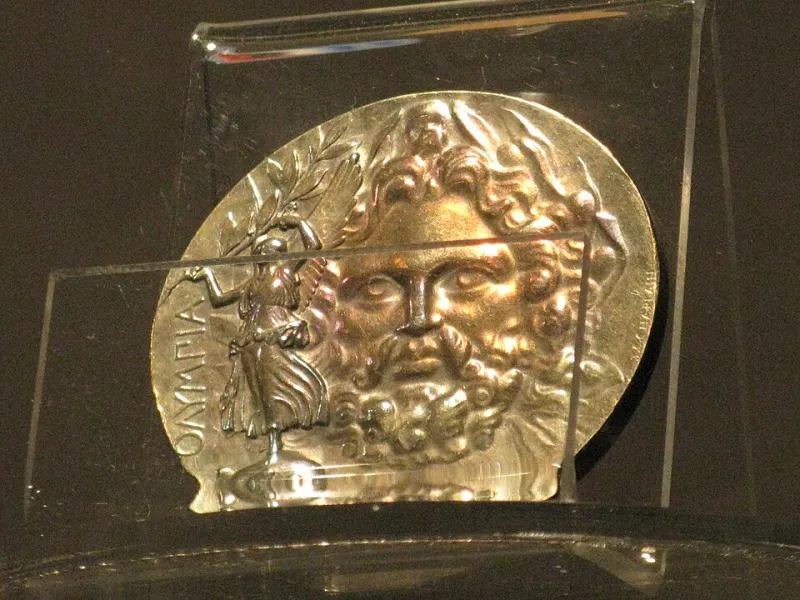
Photo: Yoho2001, Public domain, via Wikimedia Commons
Ask most American sports fans to name the foundational years of US athletics and you'll hear a familiar list. 1903, when the first World Series was played. 1920, when the NFL was founded. Maybe 1936, when Jesse Owens turned the Berlin Olympics into a statement about human dignity in front of Adolf Hitler.
1896 almost never comes up. And that's a genuine oversight — because what happened in Athens that spring quietly set in motion a chain of events that shaped the entire structure of American competitive sport for the century that followed.
Thirteen Americans on a Boat
The story of the US at the first modern Olympic Games is, by any standard, improbable. There was no official American Olympic committee. There was no government funding. A small group of track and field athletes, most of them affiliated with the Boston Athletic Association and Princeton University, scraped together enough money to make the transatlantic crossing — on a cattle ship, in some accounts — and arrived in Athens barely rested and entirely underprepared.
What happened next was one of the more remarkable debut performances in the history of international sport.
The American contingent, just thirteen athletes, won nine of the twelve track and field events on offer. James Connolly of Boston became the first modern Olympic champion when he won the triple jump on April 6, 1896. Thomas Burke won both the 100-meter and 400-meter races. Robert Garrett, a Princeton student who had never thrown a discus in competition before arriving in Greece, picked up a discus on the practice field, figured out the technique, and won the event.
The Greeks, who had expected to dominate their home Games, were stunned. The Americans, who had barely organized themselves enough to get on the boat, came home as the unofficial kings of the inaugural modern Olympics.
What Winning Abroad Did to American Sport
The impact wasn't immediately obvious, but it was profound and lasting.
The success at Athens gave enormous momentum to the Amateur Athletic Union, which had been founded in 1888 and was still establishing its authority over American track and field. The 1896 Games demonstrated that organized amateur athletics could produce world-class competitors — and that the US had the raw athletic talent to compete with anyone on the planet.
Over the following decade, the AAU used the Olympic framework to consolidate control over amateur competition in the United States, creating the infrastructure of qualifying standards, national championships, and representative selection that still underlies American Olympic preparation today. Without the credibility boost of Athens 1896, that organizational project might have taken a generation longer.
The Games also planted an idea in the American sporting consciousness that would grow into something enormous: the notion that international athletic competition was a legitimate arena for national pride. The US had no great tradition of sending athletes abroad to compete. After 1896, that began to change — and with it came the gradual development of a national investment in producing Olympic champions.
The Amateur Question
Athens 1896 also forced American sport to grapple seriously with the concept of amateurism — a debate that would define, and periodically tear apart, US athletics for the next ninety years.
The original modern Olympics were built on the amateur ideal: athletes who competed for love of sport rather than financial reward. That principle fit comfortably with the college-based athletic culture that produced most of America's 1896 Olympians. But it also created a structural tension that would eventually become unsustainable.
The long argument over amateurism — who qualified, who was secretly being paid, which working-class athletes were unfairly excluded — runs in a direct line from the principles enshrined at Athens 1896 all the way to the AAU's battles with professional athletes in the 1970s and the eventual collapse of the amateur requirement ahead of the 1992 Barcelona Games.
Every time that debate erupted in American sport, its roots traced back to the founding ideals of that first modern Olympics.
A Different Kind of Founding Myth
American sports culture loves its origin stories. The first World Series. The Ice Bowl. The Miracle on Ice. These moments work as mythology because they're clean and dramatic — a single event that crystallizes something essential about competition, identity, and national character.
1896 doesn't fit that template neatly. It was messy and improvised. The Americans who went to Athens didn't go as a nation — they went as a collection of college kids and club athletes who happened to be in the right place at the right time. There was no flag-waving send-off, no presidential endorsement, no Sports Illustrated cover waiting when they returned.
But the effects were real and lasting. The organizational infrastructure of American Olympic sport, the national investment in international competition, the ongoing argument about amateurism versus professionalism — all of it has roots in what thirteen underprepared Americans accomplished on a track in Athens in the spring of 1896.
The modern Olympics needed a starting line. So did American athletic identity. Both of them, it turns out, were drawn in the same place.