The Finish Line That Took 88 Years to Reach: The Women's Marathon and What Delayed It
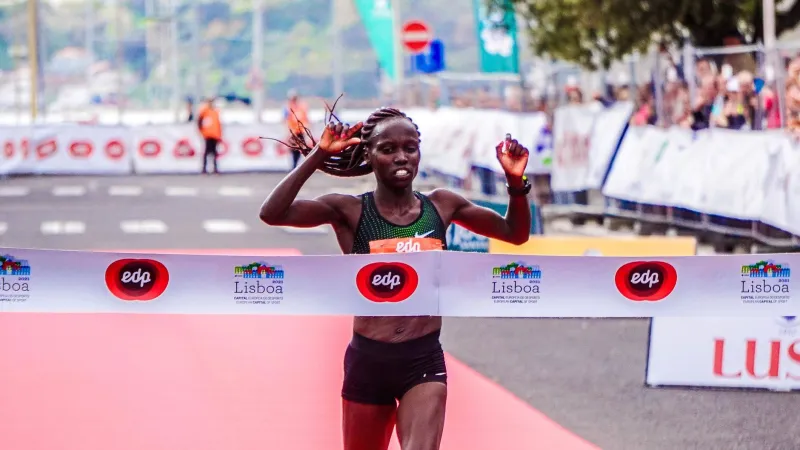
At the 1984 Los Angeles Olympics, Joan Benoit Samuelson ran into the Memorial Coliseum, squinted against the sunlight, and crossed the finish line of the first-ever women's Olympic marathon. The crowd gave her a standing ovation. She finished in 2 hours, 24 minutes, and 52 seconds—a time that would have won the men's race outright at every Olympic Games held before 1952.
Let that land for a second.
The first woman to ever win an Olympic marathon ran faster than every men's Olympic marathon champion for the first 56 years of the modern games. And yet, the Olympic movement had spent the better part of a century telling the world that women weren't built for the distance.
The gap between the men's marathon debut in 1896 and the women's in 1984 is one of the most revealing stretches of time in Olympic history—not because of what happened during it, but because of what didn't.
The Story That Started It All Wrong
The men's marathon was born from a myth. The 1896 race was designed to commemorate the legend of Pheidippides, the Athenian messenger who allegedly ran from the battlefield of Marathon to Athens to announce a Greek military victory, then collapsed and died. Whether the story is historically accurate is debatable. What isn't debatable is that it became the founding narrative of the marathon as an Olympic event.
Here's the irony: the very origin story that justified the marathon's inclusion in 1896 was a story about dying from exhaustion. And yet, the argument used for decades to exclude women from the distance was that the race was too physically dangerous for the female body.
That argument wasn't just scientifically questionable. It was internally inconsistent from day one.
The Medical Establishment Gets It Wrong
For much of the early twentieth century, mainstream medical opinion held that prolonged distance running posed specific risks to women—risks that weren't applied with the same urgency to men. Women were considered physiologically fragile in ways that made endurance sport inappropriate, even harmful. This wasn't fringe thinking. It was the consensus view of institutions that had real influence over Olympic policy.
The International Olympic Committee, operating under those assumptions, simply didn't create the event. There was no formal ban announced with great fanfare. There didn't need to be. The absence of an event is invisible in a way that a prohibition isn't.
Meanwhile, women were running anyway.
Bobbi Gibb ran the Boston Marathon in 1966 without an official bib—the race didn't accept women's applications—and finished ahead of more than half the field. Kathrine Switzer entered the 1967 Boston Marathon using her initials rather than her first name, received an official number, and completed the race despite a race official physically attempting to remove her from the course mid-run. These weren't isolated acts of defiance. They were evidence that the barrier had never been biological.
The Numbers Don't Lie—Eventually
Once women began competing in marathons officially—the Boston Marathon accepted women starting in 1972—the data came in fast. Women's marathon times improved at a rate that made the previous decades of exclusion look absurd in retrospect.
Consider this: the women's world marathon record dropped by more than 35 minutes between 1963 and 1985. That's not a gradual biological adaptation. That's what happens when a population of athletes is suddenly given permission to train seriously, compete openly, and believe the distance is theirs to run.
By the time Joan Benoit Samuelson crossed that finish line in Los Angeles, Norway's Grete Waitz had already run a 2:25 marathon. Paula Radcliffe would eventually run 2:15:25 in 2003—a record that stood for 16 years. The trajectory was steep and immediate once the door opened.
Los Angeles 1984: More Than a Race
The 1984 women's Olympic marathon wasn't just a sporting event. It was a public correction.
Benoit Samuelson's victory was watched by an estimated 2 billion people worldwide. She ran alone for most of the race, having broken away from the field early with a move that most analysts considered reckless. It wasn't reckless. It was confident. She knew exactly what she was doing and exactly how far she could go.
That confidence—the kind that comes from years of serious competitive experience—was precisely what had been withheld from women marathoners for the better part of a century. Not training facilities. Not nutrition science. Not access to better shoes. Confidence. The simple belief that the distance was theirs to attempt.
Swiss runner Gabriela Andersen-Schiess also became a defining image of that race, staggering into the stadium in the final stretch, clearly suffering from heat exhaustion but refusing assistance that would have disqualified her. She finished 37th. The image of her determination circled the globe and became, for many people, the lasting symbol of the 1984 women's marathon—a reminder of what the distance demands, and what women had always been capable of giving.
What the Gap Actually Measured
Nine decades is a long time. But in the context of athletic history, the gap between 1896 and 1984 measures something specific: the distance between what institutions believed and what was actually true.
The ancient Olympics excluded women entirely—they weren't permitted to watch, let alone compete. The modern Olympics, for all its stated ideals of universal participation, spent its first century operating on assumptions that weren't much more sophisticated than that ancient exclusion.
What changed wasn't female physiology. Women in 1896 were physically capable of running a marathon. What changed was the willingness of the governing bodies to acknowledge that capability, and the willingness of athletes to prove it regardless.
Joan Benoit Samuelson's time in 1984 didn't just win a race. It answered a question that should never have taken 88 years to ask.