Rope Burn and Reputation: The Rise and Fall of Tug-of-War as an Olympic Sport
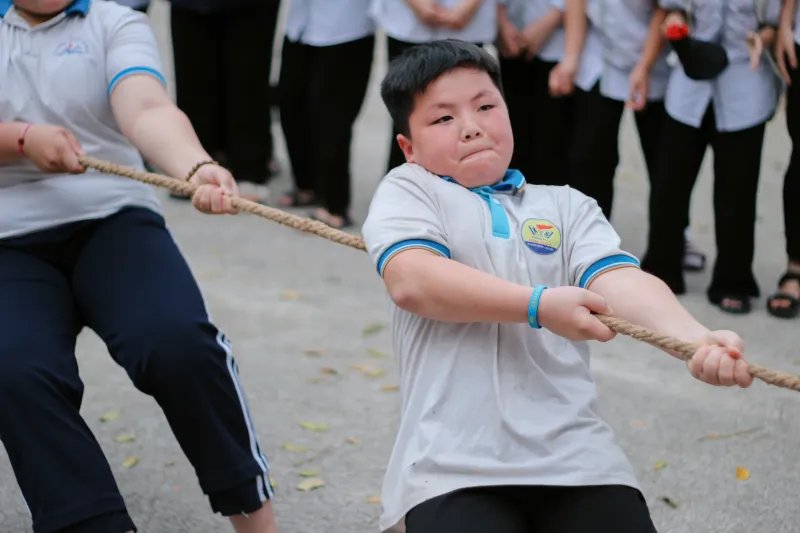
Picture the Olympic Games. The opening ceremony, the torch, the world's greatest athletes assembled in one place. Now picture eight men in a line, boots planted, hauling on a rope.
For two decades in the early twentieth century, that second image was just as Olympic as the first. Tug-of-war ran as an official medal event at five consecutive Olympic Games, from 1900 to 1920, producing genuine national rivalries, rules disputes, and at least one controversy spectacular enough to embarrass a host nation. Then it was gone — cut from the program without much public mourning — and it has never come back.
The arc of tug-of-war's Olympic career is short enough to follow in a single article, but the questions it raises are anything but small. Why was it there? Why did it leave? And what does its absence tell us about the values Americans have quietly built into the sports we take seriously?
How a Rope and Eight Men Made the Olympics
The modern Olympics of 1896 were a deliberately idealistic project. Pierre de Coubertin's vision was rooted in the ancient Greek tradition — athletic competition as a form of human excellence, a celebration of physical virtue. The early Games were also, practically speaking, still figuring out what they were. The 1900 Paris Olympics, the second modern Games, were so loosely organized they were essentially a sideshow to the World's Fair, with events scattered across months and many participants reportedly not realizing they were competing in the Olympics at all.
In that context, tug-of-war fit. It required genuine strength, coordination, and teamwork — values the era's sporting culture celebrated. It was also familiar. Tug-of-war had deep roots in American county fairs, military fitness programs, and European athletic festivals. Police and fire departments fielded competitive teams. The British, in particular, took the sport with considerable seriousness.
The event ran as a team competition, typically five to eight members per side, with the goal of pulling the opposing team six feet across a line. Simple in concept, physically demanding in execution — the same formula that has kept sports like wrestling and weightlifting in Olympic programs for over a century.
The Controversies That Came With the Rope
Tug-of-war's Olympic run was not without drama. The 1908 London Games produced what might be the event's most memorable moment — and not for athletic reasons.
The American team, composed largely of athletes from the Milwaukee Athletic Club, lost their first-round match to a team of Liverpool police officers representing Great Britain. The Americans immediately filed a protest, arguing that the British team's heavy police boots — equipped with steel cleats and heels — constituted illegal equipment, essentially turning their footwear into anchors. The British officials overseeing the competition dismissed the complaint. The Americans withdrew from the event entirely rather than continue under what they considered unfair conditions.
The controversy captured something real about the tension between tug-of-war as a test of raw human strength and tug-of-war as a technical competition where equipment and technique could be optimized. It was an early version of a debate that still runs through Olympic sport today — think swimsuits, running shoes, cycling equipment — about where athletic competition ends and technological advantage begins.
Britain dominated the event across its Olympic run, winning gold in 1908 and 1912. Sweden and the United States also medaled during the event's history, but the competition never developed the deep global participation that would have made it a marquee event.
Why It Left and Didn't Come Back
The International Olympic Committee dropped tug-of-war after the 1920 Antwerp Games as part of a broader program consolidation. The official reasoning was never fully articulated — it was part of a general trimming of events that were seen as insufficiently athletic or globally competitive. But the timing matters.
By 1920, the Olympic Games were becoming something more recognizable to modern American sports fans: a showcase for individual excellence, measurable performance, and national prestige built on the backs of identifiable star athletes. Tug-of-war produced no individual heroes. You couldn't time it. You couldn't measure the winning margin in meters or kilograms. The outcome was binary — you either pulled the other team over the line or you didn't — and it was almost impossible to build a narrative around.
American sports culture, then as now, runs on narratives. We want the story of the athlete who trained for four years for this moment, who came back from injury, who broke the record. Tug-of-war didn't generate those stories. It generated a team effort that was, by design, greater than the sum of its individual parts — which is genuinely admirable but doesn't sell tickets or create legends.
What Tug-of-War's Absence Reveals
The events that have survived and thrived in the Olympic program share certain characteristics that American sports culture rewards: individual achievement that can be quantified, a clear and objective winner, and the possibility of record-breaking. The 100-meter dash has all three. So does weightlifting, gymnastics, and swimming.
Tug-of-war has none of them. And that's not an accident — it's a reflection of the values that have quietly shaped the Olympic program over the past century, values that American sports culture has had an outsized influence in promoting.
This matters for contemporary debates about Olympic inclusion. Breakdancing made its Olympic debut at Paris 2024. Sport climbing, skateboarding, and surfing were added in recent cycles. The arguments for including them — youth appeal, global participation, athleticism that doesn't fit traditional molds — run directly counter to the logic that eliminated tug-of-war. The Olympics has always been a negotiation between tradition and relevance, between what sport has been and what it needs to become.
Tug-of-war's partisans — and there are still competitive organizations around the world that take the sport seriously — argue that it never got a fair hearing. That the dismissal of team-based strength competition reflects a cultural bias toward individual achievement that has always been more American than universal.
They're not entirely wrong. The rope is still out there. Whether it ever finds its way back to the Olympic stage probably says more about us than it does about the sport.