Nobody Could Agree Who Won: The Long, Messy History of Getting the Call Right at the Olympics
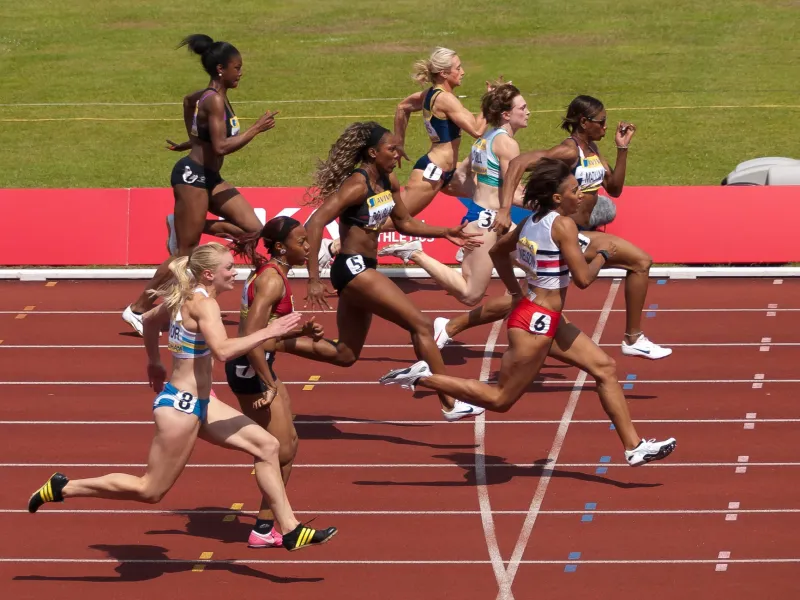
Picture this: two sprinters hit the line at virtually the same moment. The crowd erupts. Half of them think one athlete won. Half think the other did. The judges huddle. Arguments break out. And somewhere in the chaos, a decision gets made — one that will follow both competitors for the rest of their lives.
This scene feels ripped from a modern broadcast, the kind of moment that sends Twitter into meltdown while analysts replay the same half-second of footage seventeen times. But versions of this exact drama played out more than 2,500 years ago on a packed dirt track in ancient Greece. The technology has changed almost beyond recognition. The arguments, it turns out, have not.
Eyes, Opinions, and Olive Branches
In ancient Olympia, the men responsible for determining athletic outcomes were called the Hellanodikai — roughly translated as "judges of the Greeks." These were not impartial officials selected for their sharp eyesight. They were prominent citizens, often politically connected, who held enormous authority over the Games. Their word was final. Their integrity was everything.
And their integrity was not always intact.
The ancient Greeks were acutely aware that human judgment could be corrupted. The Olympic sanctuary at Olympia was lined with bronze statues called Zanes, each one funded by fines levied against athletes or judges caught cheating or taking bribes. These weren't hidden away in a back room — they were positioned along the path leading to the stadium, so every competitor had to walk past the monuments to other people's dishonesty before they ever set foot on the track. It was ancient Greece's version of a warning label.
Bribery wasn't the only problem. Close finishes in the stadion — the foundational sprint of the ancient Games, roughly 200 meters long — were decided entirely by the naked eye. When two athletes crossed the finish line within a step of each other, the Hellanodikai made a call. There was no replay. No secondary angle. No appeal process beyond a formal complaint to the Olympic council, which rarely overturned anything. You either accepted the verdict or you left Olympia in disgrace.
The system worked well enough when the outcome was obvious. It failed, sometimes spectacularly, when it wasn't.
The Long Gap Before the Camera Arrived
For centuries after the ancient Games ended and long into the modern Olympic era that began in Athens in 1896, athletic competitions were still being decided by human officials standing at the finish line and doing their best. Stopwatches replaced sundials. Trained timekeepers replaced amateur observers. But the fundamental problem — that two athletes could arrive at the same point in space at nearly the same moment, and someone had to decide which one got there first — remained stubbornly unsolved.
The early modern Olympics produced their share of disputed outcomes. At the 1904 Games in St. Louis, record-keeping and officiating were so chaotic that the marathon result had to be reversed after the apparent winner was found to have spent part of the race riding in a car. That was an extreme case, but it illustrated a broader truth: the infrastructure for getting close calls right simply didn't exist yet.
 Photo: St. Louis, via www.arcticgetaway.com
As the Games grew through the 1920s and 1930s, so did the stakes attached to every decision. More nations were competing. National pride was increasingly tied to medal counts. A disputed result wasn't just an athletic controversy — it was a diplomatic incident waiting to happen. The pressure to get calls right was mounting, and human eyes alone were no longer good enough.
The Camera Changes Everything
Photo finish technology arrived at the Olympics in stages rather than all at once. Cameras capable of capturing the finish line in fine detail began appearing at major track meets in the 1930s, and the concept was gradually refined and standardized over the following decades. By the time the technology was widely adopted at the Olympic level, it had already transformed how close races were adjudicated at the elite level of the sport.
The principle was straightforward: a camera positioned at the finish line captures a continuous image of every athlete crossing, producing a composite photograph that shows the precise order in which each competitor's torso — the part of the body that officially matters — broke the plane. Fractions of a second that no human eye could distinguish became visible, measurable, and defensible.
What the photo finish camera did, more than anything else, was remove the official from the center of the story. The judge was no longer the authority. The image was. And while arguments about photo finish interpretations have certainly occurred over the years, the shift represented a fundamental change in how athletic truth was established — from the testimony of witnesses to the evidence of technology.
The Controversy Never Fully Goes Away
Here's the uncomfortable reality: even with all the technology available to modern Olympic officials — photo finishes, electronic timing accurate to thousandths of a second, video review systems, and panels of trained adjudicators — controversy has never been fully eliminated from Olympic judging.
Subjectively scored sports like gymnastics, diving, and boxing have generated some of the most heated disputes in Olympic history, precisely because no camera can resolve a disagreement about the quality of a performance. The 2002 Winter Olympics figure skating scandal, in which a French judge admitted to being pressured to favor a Russian pair, felt like something out of ancient Olympia — complete with behind-the-scenes pressure, institutional corruption, and a result that had to be partially reversed. The Zanes would have recognized the situation immediately.
Even in theoretically objective events, disputes arise. Timing systems can malfunction. Sensor placements can be questioned. The definition of what counts as a legal finish in swimming has been debated at the highest levels of the sport.
Why the History Still Matters
The evolution from shouting Hellanodikai to photo finish cameras is more than a story about technology. It's a story about what fairness means, who gets to define it, and how much trust we're willing to place in the systems we build to protect it.
The ancient Greeks understood that the desire to win could corrupt the people charged with deciding who did. They responded by building accountability into the physical landscape of Olympia itself — those bronze statues weren't just punishments, they were reminders. Modern sports have responded with cameras, sensors, and review panels. The instinct is the same even if the tools look nothing alike.
Every time a close finish gets reviewed, every time a judge's score gets questioned, every time a nation protests a result, we're participating in a tradition that stretches back to the earliest days of organized competition. The finish line has always been contested territory. The only thing that changes is how we fight over it.