The Race Nobody Could Officially Call: What Happened Before Cameras Told Us Who Won
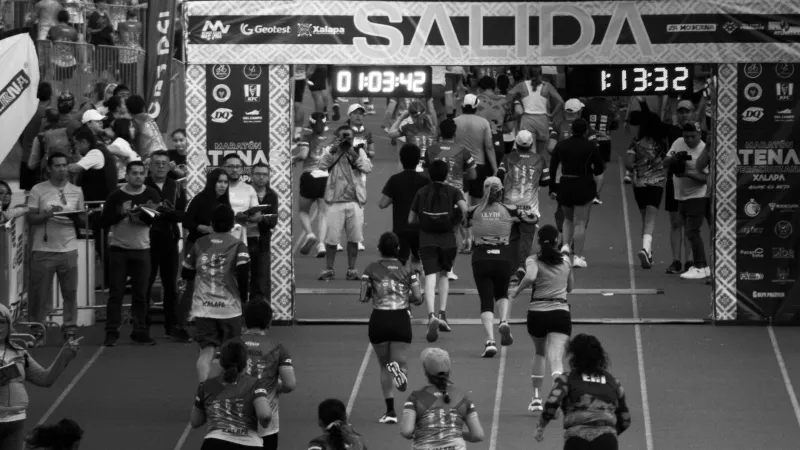
Imagine watching two sprinters hit the tape at what looks like the exact same moment. No camera. No replay. No laser timing system. Just five judges standing at the finish line, each one slightly differently positioned, each one absolutely certain they saw what they saw.
Now imagine that race decides an Olympic gold medal.
This wasn't a hypothetical. This was the reality of early Olympic competition, and the disputes it generated weren't just dramatic—they were philosophically revealing. Before technology gave us proof, winning was partly a matter of who told the most convincing story afterward.
The Eye as the Only Evidence
The modern Olympics began in Athens in 1896 with 241 athletes, 43 events, and essentially zero objective timing infrastructure. Races were judged by human officials positioned at the finish line. Times were recorded with handheld stopwatches—a technology that sounds primitive today but was genuinely cutting-edge for its era.
The problem wasn't the stopwatch, though. The stopwatch at least gave you a number. The problem was the finish itself. When athletes crossed the line within fractions of a second of each other, the official record came down to the judgment of whoever was standing closest and paying the most careful attention. There was no appeal to footage. There was no second look. The judge's word was the result, full stop.
For events with clear margins of victory, this worked fine. But as the Olympics grew and competition intensified, the margins shrank. And that's when the system started showing its cracks.
The 1908 Marathon: A Cautionary Tale
No single Olympic event better illustrates the chaos of pre-technology officiating than the 1908 London Marathon—a race so controversial it rewrote the rules of the sport.
Italian runner Dorando Pietri entered the Olympic stadium first, having led the race for the final stretch. But he was visibly collapsing. He fell multiple times on the track. Officials, in a moment of instinct and sympathy, helped him to his feet and assisted him across the finish line.
He was disqualified. American Johnny Hayes, who entered the stadium behind Pietri and finished without assistance, was awarded the gold medal.
The controversy wasn't really about the disqualification—that call was technically correct under the rules. The controversy was about what the world had seen. Pietri's collapse had been witnessed by thousands of spectators and photographed extensively. Queen Alexandra, moved by his effort, presented him with a special gold cup the following day. Hayes won the medal; Pietri won the narrative.
The incident forced organizers to confront an uncomfortable truth: in the absence of precise, objective documentation, the emotional story often overpowers the official result. And that's a problem for an institution trying to establish itself as the ultimate arbiter of athletic achievement.
When Judges Disagreed With Each Other
Sprint finishes produced a different category of controversy—quieter than the Pietri saga but arguably more corrosive to the credibility of results.
In multiple early Olympic sprint events, judges at the finish line recorded different times on their individual stopwatches. The standard practice was to take an average or defer to the chief judge's observation. But when the margin between athletes was smaller than the margin of human reaction time—which is roughly 0.2 seconds—averaging stopwatch readings was essentially a statistical exercise dressed up as a sporting result.
This wasn't anyone's fault. The technology simply didn't exist to do better. But it created an environment in which close results were, at some level, semi-official guesses. Athletes and their national delegations knew this, and disputes followed accordingly.
The Camera Changes the Question
Photo finish technology began appearing at major athletics events in the 1930s and became standard at the Olympics by the London Games of 1948. The effect was immediate and transformative—but not entirely in the way you might expect.
Yes, photo finish cameras resolved disputes. They gave officials an objective record that could be reviewed, enlarged, and analyzed. The era of judges disagreeing about what they'd seen was effectively over for sprint finishes.
But the technology also changed the nature of the question being asked.
Before photo finishes, the question was: who crossed the line first? After photo finishes, the question became: which part of the athlete's body crossed the line first, and at what precise fraction of a second? Those aren't the same question. The second one is far more specific, and its answer occasionally produces results that feel strange to the naked eye.
Modern sprint races are decided by torso position at the line—not head position, not arm position, not foot position. This is a rule that emerged because technology made such distinctions measurable. The ancient Greeks, judging by observation, never had to make that call. Whoever looked like they won, won.
Instant Replay and the Endless Review
The evolution didn't stop with photo finish cameras. Video replay entered Olympic officiating progressively across the second half of the twentieth century, and its impact on field events, team sports, and judged competitions has been just as significant as its impact on sprint finishes.
Today, the question of what counts as proof has expanded far beyond the finish line. In swimming, touch-pad sensors measure to the hundredth of a second. In gymnastics, scoring algorithms process dozens of variables simultaneously. In track cycling, cameras capture wheel positions at angles no human judge could replicate.
Each technological layer has made results more accurate. It has also, quietly, made the role of human judgment smaller—and the role of the machine larger.
What We Gained, What We Lost
There's a version of this story that's straightforwardly positive: technology made the Olympics fairer, and fairer is better. That's true. Athletes today can be confident that a close finish will be resolved correctly, and that confidence matters.
But there's something worth noting in the shift. Early Olympic controversies, for all their messiness, kept human beings at the center of the story. The disputes were dramatic precisely because they were unresolved—because two different people could watch the same race and come away with different truths.
Modern technology has largely eliminated that ambiguity. The camera tells us what happened. The sensor confirms it. The replay validates it.
What it can't do is tell us what it felt like to stand at that finish line in 1908, watching Dorando Pietri fall and rise and fall again, and wonder whether the rules had just gotten in the way of something true.
Some questions, it turns out, don't have a photo finish.