Fifty Years, One Finish Line: The Quiet Revolution in Women's Athletic Performance
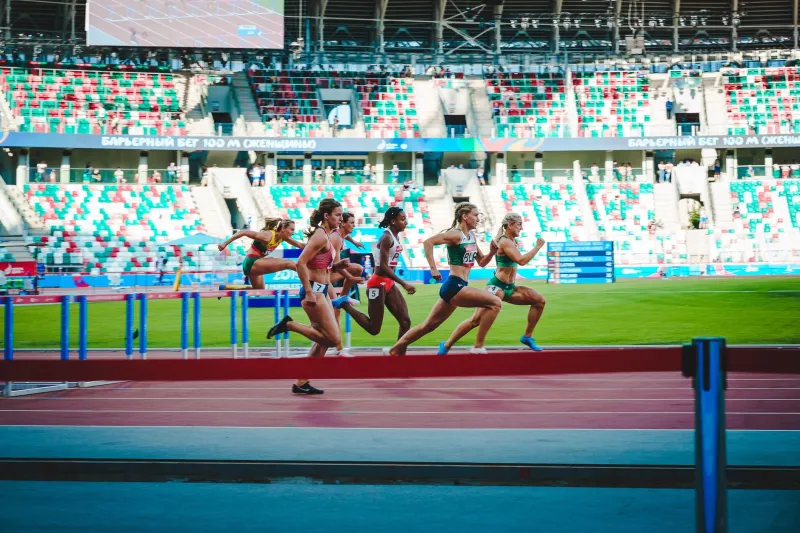
There's a famous story in American sports culture about Roger Bannister cracking the four-minute mile in 1954 — the moment when a psychological wall came down and the record books were never the same again. But there's a quieter, arguably more dramatic story playing out across the entire landscape of women's athletics, one that hasn't gotten nearly enough attention: in just half a century, women competitors have closed performance gaps that many once assumed were permanent facts of biology.
This isn't a story about catching up to men. It's a story about what happens when an entire population of athletes is finally allowed to compete, train professionally, and access the same science and resources that have always been available to their male counterparts. The results have been extraordinary.
Where Women Started — and Where They Were Kept
Women were officially excluded from the ancient Olympic Games entirely. That's not a small footnote — it's the foundation of a two-thousand-year head start that men's athletics built its records on. Even when Pierre de Coubertin revived the modern Olympics in Athens in 1896, women were not part of the plan. A handful of women competed unofficially in tennis and golf at the 1900 Paris Games, but meaningful women's track and field didn't arrive until 1928, and even then it was limited.
The 1500 meters — one of the most celebrated middle-distance events in track — wasn't open to women at the Olympics until 1972. The marathon, an event so culturally loaded in American sports that it anchors everything from Boston to the New York City fall racing calendar, wasn't an Olympic event for women until 1984 in Los Angeles.
Let that sink in. Women ran their first Olympic marathon the same year Michael Jordan was drafted.
The Numbers That Don't Lie
When Lyudmila Bragina won the inaugural women's Olympic 1500m in Munich in 1972, her winning time was 4:01.4. That was a world record at the time. By comparison, the men's Olympic 1500m record from the same era was hovering around 3:34. The gap looked enormous — nearly 30 seconds.
Fast forward to the Tokyo 2020 Olympics. Faith Kipyegon of Kenya won the women's 1500m in 3:53.11, a time that would have won every men's Olympic 1500m final held before 1948. In just 50 years of official competition, women had erased what looked like an insurmountable deficit and kept going.
The marathon tells a similar story. Joan Benoit Samuelson won that first women's Olympic marathon in Los Angeles in 1984 with a time of 2:24:52 — a performance that was genuinely world-class. Today, the women's marathon world record sits at 2:09:56, set by Ruth Chepngetich in Chicago in 2024. That's a 15-minute improvement in roughly four decades, a rate of progress that has no real parallel in men's marathon history over the same period.
Why the Gap Closed So Fast
Sports scientists point to several converging forces that explain the rapid trajectory.
Access to professional training was the most immediate factor. Before Title IX passed in the United States in 1972, women had almost no institutional support for competitive athletics at the collegiate level. Once that changed, the pipeline of trained, coached, and developed female athletes exploded. The same effect played out globally as national sports programs began investing in women's competition seriously.
Sports science caught up — or rather, started being applied equally. Periodization training, VO2 max optimization, altitude training camps, and biomechanical analysis had been refining men's performances for decades before women's programs adopted them at scale. When those tools were finally applied to women's athletics with the same rigor, the results were predictable: times dropped fast.
Nutrition and body composition research specifically focused on female athletes began emerging in the 1990s and 2000s, replacing outdated assumptions about women's physiology with actual data. The old coaching wisdom — much of it based purely on male athletic models — was revised, and performance followed.
Depth of competition matters enormously, and it grew. When only a few hundred women worldwide are seriously competing in an event, the record reflects the best of a small pool. As global participation expanded, so did the talent finding its way to the top.
What Ancient Olympia Would Have Made of It
The original Games at Olympia held their own women's competition — the Heraia, a footrace held separately in honor of the goddess Hera. It was modest compared to the men's program, limited to unmarried women racing a shortened version of the stadium track. But the fact that it existed at all suggests the ancient Greeks understood something that the modern world took centuries to act on: women compete, and when given the chance, they push limits.
The trajectory of women's athletic records since 1972 is essentially a controlled experiment in what happens when artificial barriers are removed. The data argues powerfully that the speed of improvement we've seen is not a biological ceiling being approached — it's the natural result of a talent pool that was always there, finally being cultivated.
The Finish Line Isn't Here Yet
Current projections from sports scientists suggest women's performances in endurance events will continue closing the gap with men's for the foreseeable future, particularly in ultra-distance events where physiological differences narrow considerably. In ultramarathons — events the ancient Greeks never imagined — women have occasionally outright beaten male competitors in overall standings.
The four-minute barrier Roger Bannister broke in 1954 became a symbol of human possibility. The barrier that women's athletics has been quietly demolishing for 50 years — the assumption that female performance has a lower ceiling — may be the more important story. Every time a world record falls in women's track, it's a reminder that the starting line matters as much as the finish line. The race looks very different depending on when you were allowed to enter it.