Gone But Not Forgotten: The Olympic Events That History Left Behind
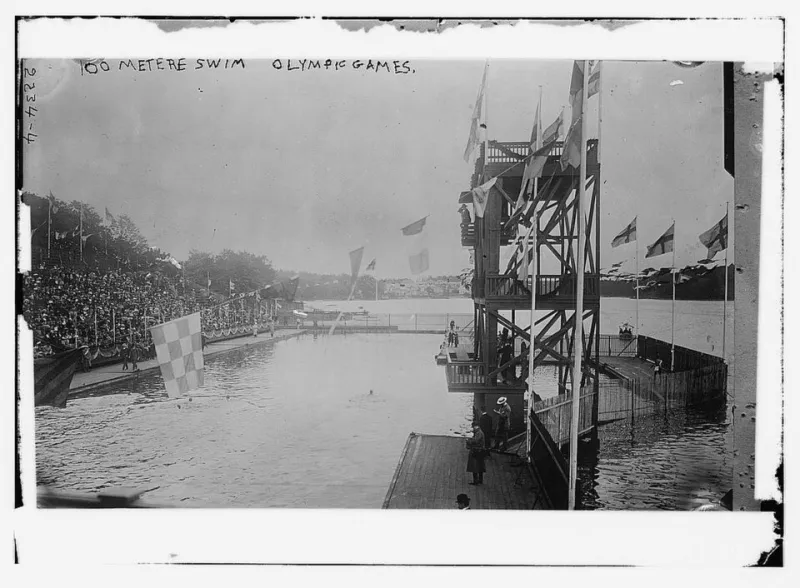
Photo: The Library of Congress, No restrictions, via Wikimedia Commons
We tend to think of the Olympics as a stable institution — the same iconic events, the same rings, the same basic structure repeated every four years. But that picture is an illusion. The Olympic program has been in constant motion for nearly three thousand years, and the sports that didn't survive tell a story every bit as interesting as the ones that did.
From the mule-cart races of ancient Olympia to the tug-of-war pits of early twentieth-century London, the graveyard of discontinued Olympic events is a strange and revealing place. Walk through it long enough and you start to understand something important: the decision about which physical contests deserve to be called sport has always been political, cultural, and — for American athletes especially — occasionally infuriating.
The Ancient Casualties
The ancient Olympics ran for more than a thousand years, from 776 BC until the Roman Emperor Theodosius I shut them down in 393 AD. In that time, the program expanded well beyond the original single footrace, adding events that reflected the military culture and social values of ancient Greece.
The hoplitodromos — the armed race — was one of the most distinctive. Competitors ran the length of the stadium wearing a bronze helmet and carrying a heavy shield, sometimes also wearing greaves on their legs. It wasn't just athletic spectacle; it was functional military training, and the ancient Greeks saw no reason to separate the two.
Then there was the tethrippon, the four-horse chariot race, which became one of the most prestigious events in the ancient Games — and one of the most dangerous. Crashes were common, fatalities not unheard of. The event rewarded wealth as much as athletic ability, since owning and training four racehorses was beyond the means of ordinary citizens. It survived for centuries anyway, because prestige and spectacle have always been powerful arguments for keeping an event on the program.
The apene — a race featuring mule-drawn carts rather than horses — had a shorter shelf life. Introduced in 500 BC, it was dropped from the program just a few decades later. Ancient sources suggest the Greeks found it undignified. Even in antiquity, not every experiment in competitive formats lasted.
The Modern Era's Forgotten Events
When Pierre de Coubertin revived the Olympics in 1896, he inherited the ancient tradition of an evolving program. The early modern Games were, by today's standards, wonderfully chaotic in their willingness to try things.
Tug-of-war appeared at five consecutive Olympics between 1900 and 1920. It was a genuine team competition, contested seriously by national squads who trained specifically for the event. At the 1904 St. Louis Games, three American club teams entered — and finished first, second, and third in what amounted to a domestic championship wearing Olympic credentials. When the event was finally dropped after the 1920 Antwerp Games, American tug-of-war teams lost one of their most reliable sources of Olympic hardware.
Live pigeon shooting debuted and immediately departed at the 1900 Paris Games, where approximately three hundred birds were killed during competition. It remains the only Olympic event in history in which animals were intentionally killed as part of the contest. The backlash was swift enough that the event was replaced with clay target shooting at the next Games and has never returned.
Motorboat racing appeared at the 1908 London Olympics and promptly disappeared, undone by bad weather and a general sense that a combustion engine doing most of the work sat uneasily alongside the Olympic ideal of human athletic achievement.
Perhaps most surprising to modern audiences: golf and rugby were both Olympic sports in the early twentieth century before being dropped for decades. Golf returned at the 2016 Rio Games after a 112-year absence. Rugby sevens joined the program the same year. Both resurrections were driven largely by the commercial appeal of bringing major global sports back under the Olympic umbrella — a reminder that the program's evolution has always been shaped by money and audience as much as by any principle of athletic purity.
The American Angle
For US athletes and fans, the history of discontinued events carries a particular sting. American competitors have a recurring habit of dominating events that subsequently get cut — or of being denied the chance to compete in events that disappear before they can be fully exploited.
The tug-of-war situation at 1904 was almost farcical in its American-ness: the US swept the podium in their own backyard, and the event was gone within two decades. American shooters dominated the early years of Olympic shooting events, including formats that no longer exist. The US also had strong performers in the standing high jump and standing long jump — events that required explosive power without a running start — before both were eliminated after 1912 as the program streamlined toward the running-approach versions that remain today.
Each of these cuts followed a similar logic: the event was too niche, too culturally specific, or too difficult to scale into a global competition. That logic is reasonable. It also consistently disadvantaged American athletes who had built genuine expertise in events that the program eventually discarded.
What the Graveyard Tells Us
The discontinued events aren't just curiosities. They're a record of how societies decide which physical contests deserve celebration and which ones don't — and that decision has never been purely athletic.
Mule-cart races were dropped because they seemed undignified. Live pigeon shooting was dropped because the optics were terrible. Motorboat racing was dropped because a machine doing the work felt like cheating. Tug-of-war was dropped, at least in part, because it looked more like a county fair attraction than a world-class athletic competition.
None of those judgments are objective. They reflect the values, aesthetics, and commercial interests of the people making the decisions at a particular moment in history.
The Olympic program being considered for 2028 in Los Angeles will include breakdancing — added at Paris 2024 — and flag football, a direct nod to American cultural exports. Some of those additions will survive. Others will eventually join the mule-cart race and the tug-of-war in the long, fascinating graveyard of events that the Games tried and then left behind.
 Photo: Los Angeles, via a.travel-assets.com
Every sport in that graveyard was once somebody's moment. That's worth remembering.