Victory Was Enough: The Ancient World Had No World Records — And That Tells Us Everything

Photo: Richard Croft , CC BY-SA 2.0, via Wikimedia Commons
On the night of July 23, 2012, Usain Bolt ran 100 meters in 9.63 seconds at the London Olympics. We know this with extraordinary precision. We know it because 40 cameras captured the race from multiple angles. We know it because a Seiko timing system accurate to one-thousandth of a second recorded every stride. We know it because the data was instantly transmitted, verified, and archived in multiple formats that will be accessible for as long as digital storage exists.
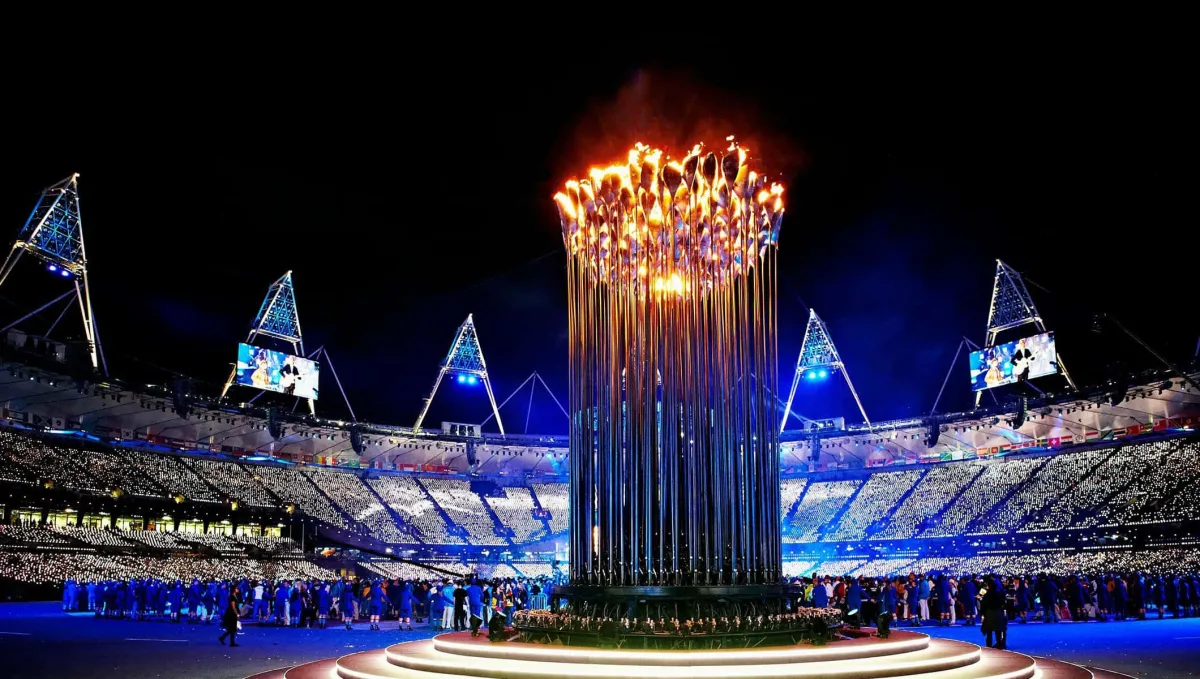 Photo: London Olympics, via ahaslides.com
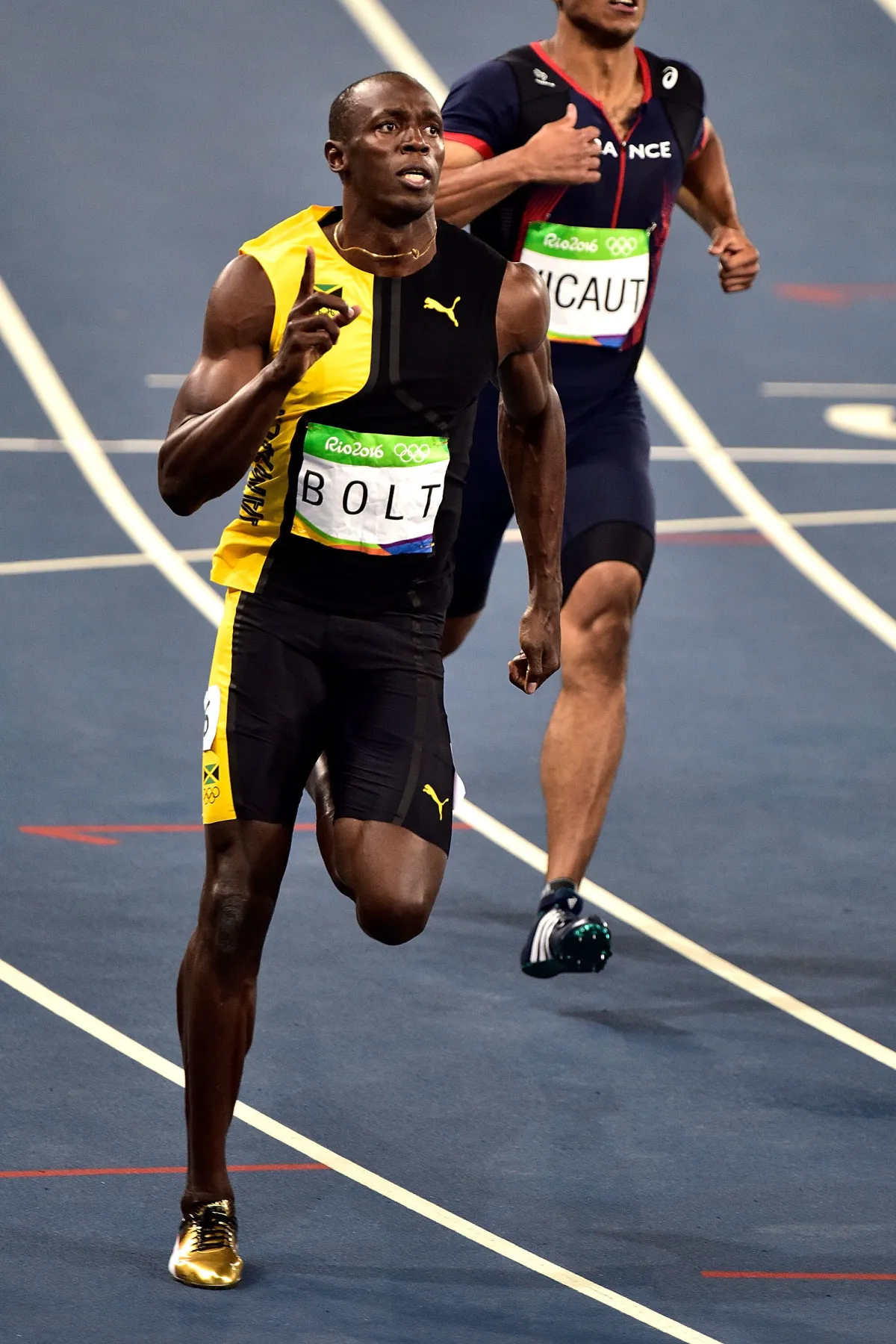 Photo: Usain Bolt, via wallpapercat.com
We know, to a degree of certainty that would have seemed like magic to any previous generation of humans, exactly how fast Usain Bolt ran.
Now consider this: the ancient Greeks, who invented the Olympic Games, had no way of knowing how fast anyone ran. Not approximately. Not roughly. Not even within a few seconds. They had no clocks, no stopwatches, no standardized measurement system for time. They watched a race, they saw who crossed the finish line first, and they declared that person the winner.
That was it. That was the entire system.
And yet the ancient Olympics produced extraordinary athletes whose performances — in jumping, throwing, and running — were discussed and celebrated for centuries. How did a culture so obsessed with athletic excellence function without any way to measure it?
The Philosophy Behind the Absence
Before assuming the ancient Greeks simply hadn't gotten around to inventing good timekeeping, it's worth considering whether the absence of measurement was at least partially intentional — or at minimum, philosophically comfortable.
For the Greeks, the purpose of athletic competition was fundamentally relational. You weren't trying to beat an abstract number. You were trying to beat the man standing next to you on the starting line. Victory was a social act, a demonstration of superiority over a specific rival at a specific moment. The question "how fast did you run?" would have seemed almost nonsensical. The only meaningful question was "did you win?"
This isn't just a technical limitation. It reflects a fundamentally different conception of what athletic achievement means. The ancient Greek framework was comparative and immediate: better than this person, today, here. The modern framework is absolute and historical: faster than any human being has ever run, ever, anywhere.
Those are genuinely different ideas about what makes an athletic performance valuable.
What the Greeks Did Measure
This doesn't mean the ancient world had no interest in athletic data whatsoever. They kept detailed records — they just kept different kinds.
The most carefully maintained records at Olympia were the victor lists. Beginning from 776 BC, the names of Olympic champions were recorded and preserved. These lists, known to historians as the Olympic register, survived in fragmentary form and were used by ancient writers including Pausanias to reconstruct the history of the games centuries later. Winning was considered significant enough to document. The margin of victory was not.
For field events like the discus and the long jump, there was at least the possibility of spatial measurement. Greek officials used ropes and markers to indicate where a discus landed or where an athlete's feet struck the ground at the end of a jump. But even here, the records were not systematically preserved or compared across generations. A jump that won in 500 BC was not routinely compared to a jump that won in 450 BC. The champion of each Olympiad stood alone in their moment.
The one ancient athletic measurement that did survive in any form is more legend than data. The long jump of Phayllos of Croton — reportedly 55 feet — was considered so extraordinary that it was preserved in ancient texts as a kind of mythological benchmark. Modern sports historians have spent considerable energy debating whether this figure was accurate, exaggerated, or the result of a multi-jump format that doesn't correspond to the modern standing or running long jump. The fact that we're still arguing about it nearly 2,500 years later illustrates exactly why precise measurement matters: without it, extraordinary performances become mythology.
 Photo: Phayllos of Croton, via yourfarmandgarden.com
The Slow Invention of the Record
The transition from "who won" to "how fast did they win" happened gradually, and it required several overlapping developments that took centuries to converge.
The first was mechanical timekeeping. Reasonably accurate mechanical clocks existed in Europe by the 14th century, but they were far too imprecise for athletic measurement. Stopwatches capable of measuring seconds didn't become widely available until the 18th century, and even then, their accuracy was limited by the reflexes of the person operating them.
The second was standardization. Before you can compare performances across time, you need to know that the course, the distance, and the conditions were genuinely comparable. Early road races were measured imprecisely. Track surfaces varied enormously. Even the definition of a mile wasn't fully standardized across different regions until relatively recently in historical terms.
The third — and perhaps most important — was a cultural shift in what people found interesting about sport. Somewhere in the 19th century, as organized athletics began to take institutional form in England and America, the idea of the "record" emerged as a distinct concept. It wasn't just about who won a race. It was about whether that performance represented the fastest any human being had ever run that distance under comparable conditions.
This was a genuinely new idea. And it changed everything.
The Modern Obsession With the Thousandth of a Second
Today, the infrastructure we've built around athletic measurement is staggering. The World Athletics governing body maintains official world records for every standard track and field event. Those records can only be set under specific conditions: certified courses, approved timing systems, anti-doping controls, wind measurement for sprint and jump events. A performance that doesn't meet all of these criteria can be the fastest in history and still not count.
At the elite level, races are decided by margins invisible to the naked eye. The 2016 Olympic 100-meter final between Usain Bolt and Justin Gatlin was separated by 0.08 seconds — a gap that would have been completely undetectable to any observer at the ancient Olympics, and unrecordable by any technology available before the 20th century.
We have built an entire aesthetic around these margins. Photo finishes are among the most dramatic images in sports. The moment when a world record falls — when the clock stops at a number slightly smaller than the number that has stood for years — generates a specific kind of excitement that has no ancient equivalent.
What We Lost and What We Gained
There's a reasonable argument that the ancient Greek approach captured something important that our measurement obsession has obscured. A race is a race. The person who crosses the line first wins. The difference between 9.58 seconds and 9.63 seconds is real, but it's also a kind of abstraction — a way of comparing athletes who never competed against each other, in conditions that are never perfectly identical, across a span of time that makes direct comparison philosophically suspect.
But there's an equally reasonable argument that the modern record system has done something genuinely wonderful: it has connected athletes across generations in a way the ancient Greeks never could. When a young sprinter in a high school gym watches Bolt's 9.58 and thinks "I want to break that," they are competing against a ghost — against the best performance in human history — in a way that is motivating precisely because it is measured and precise and real.
The ancient Greeks gave us the competition. The modern world gave us the record. Between them, they built the sport we watch today — where every performance exists in relationship to every other performance that has ever been documented, and where the starting line is not just a mark on a track but a point in a very long history.