The Sports America Rejected: What Our Missing Olympic Events Reveal About Who We Really Are
The Events That Never Made the Journey
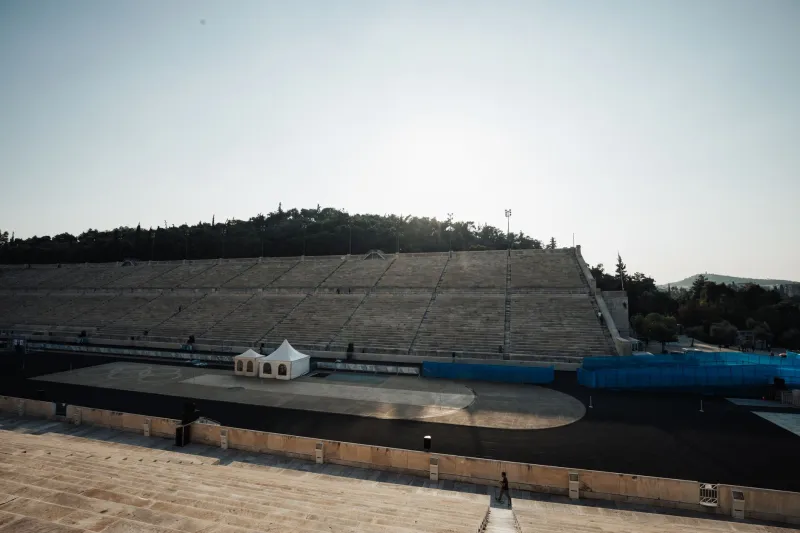
When Pierre de Coubertin revived the Olympics in 1896, he faced a fascinating challenge: which ancient events deserved spots in the modern games? Some ancient competitions—wrestling, running, discus—translated perfectly to the modern world. Others, like chariot racing and pankration, were left in the historical dust.
 Photo: Pierre de Coubertin, via similaires.com
But America's relationship with Olympic sport created an even more selective filter. As the modern Olympics evolved and American sports culture developed, certain events thrived while others withered. The pattern of what survived and what disappeared reveals something profound about American values, fears, and sporting DNA.
Consider this: ancient Greece celebrated more than 20 different Olympic events. Modern America has built massive industries around maybe half a dozen sports. What happened to the rest, and why do those gaps matter?
The Violence We Couldn't Stomach
Pankration might have been ancient Greece's most popular Olympic sport—a no-holds-barred combination of wrestling and boxing where competitors fought until someone submitted or died. It was brutal, technical, and absolutely riveting to ancient audiences. Yet pankration never found a foothold in American Olympic culture, despite our love affair with combat sports.
Why? Because pankration represented uncontrolled violence, and America has always preferred its aggression channeled and regulated. We created football, with its carefully structured mayhem and protective equipment. We embraced boxing, but with weight classes, rounds, and referees. Mixed martial arts took over a century to gain mainstream acceptance, and even then only with extensive rules and medical oversight.
The absence of pankration from American sports culture reveals our fundamental ambivalence about violence. We want aggression and physical dominance, but we need them wrapped in structure and safety protocols. Ancient Greeks celebrated raw combat; Americans celebrate controlled collision.
The Pageantry We Abandoned
Chariot racing was the ancient world's most spectacular sport—Formula 1 with horses, complete with celebrity drivers, team sponsorships, and crashes that could kill dozens of competitors in a single race. It was also wildly popular, drawing crowds of 250,000 to the Circus Maximus in Rome.
 Photo: Circus Maximus, via www.formularbox.de
America never developed anything comparable, despite our love of speed and spectacle. Horse racing exists, but as a niche sport focused on individual animals rather than team competition. Auto racing grew into a major industry, but without the gladiatorial pageantry that made chariot racing so compelling to ancient audiences.
The absence of chariot racing's spiritual successor reveals something interesting about American sporting preferences. We love speed and competition, but we're uncomfortable with sports where death is a routine possibility. Ancient audiences accepted casualty rates that would horrify modern Americans. We want our thrills sanitized.
The Skills We Didn't Need
The hoplitodromos—a sprint run in full military armor—was one of ancient Greece's most prestigious events. Warriors ran 400 meters wearing bronze helmets, shields, and greaves, demonstrating the speed and endurance that could mean survival in battle. It was practical, demanding, and deeply meaningful to societies where every citizen might need to fight.
America never developed equivalent military-athletic competitions, despite our martial culture. We separated military training from civilian sport almost completely. While other nations maintained traditions of military-style athletic competitions, America chose to keep warfare and games in different spheres.
This separation reflects a uniquely American approach to civilian-military relations. We honor military service but don't want it to dominate civilian culture. Ancient Greeks saw no contradiction between warrior training and athletic competition; Americans have always maintained that distinction.
What We Built Instead
America didn't just reject certain ancient events—we created entirely new forms of competition that reflected our values and geography. Basketball emerged from our urban culture. Baseball developed from our pastoral traditions. Football combined our love of strategy with our comfort with organized violence.
These uniquely American sports reveal what we actually value in competition: teamwork over individual heroics, strategic thinking over pure physical dominance, and innovation over tradition. We took the competitive spirit of ancient athletics and channeled it through distinctly American cultural filters.
Our team-sport focus also reflects American democratic ideals. While ancient Olympics celebrated individual excellence, American sports emphasize collective achievement. Even our individual sports—golf, tennis, swimming—are often structured around team competitions and collaborative training environments.
The Gender Lines We Drew
Ancient Olympics excluded women completely, but they had separate female athletic festivals like the Heraia games honoring Hera. These events featured their own traditions and competitions, including foot races and possibly wrestling.
America's approach to women's athletics followed a different pattern entirely. Rather than creating separate traditions, we gradually integrated women into existing sports structures. This reflected our legal and cultural emphasis on equal access rather than separate-but-equal institutions.
The result is that America never developed the rich tradition of women's-only athletic festivals that existed in ancient Greece. We chose integration over separation, reflecting broader American approaches to gender equality that prioritize access over tradition.
The Class Barriers We Maintained
Ancient Olympics were theoretically open to all free Greek males, regardless of wealth. In practice, only those who could afford training time competed, but the ideal of merit-based competition was central to the Olympic spirit.
American sports developed along different lines, with clear amateur-professional distinctions that often reflected class boundaries. We created elaborate systems to prevent working-class athletes from earning money while competing, effectively limiting elite competition to those wealthy enough to train without compensation.
This tension between Olympic ideals and American class consciousness shaped our sporting culture for decades. We wanted to celebrate merit-based competition while maintaining social hierarchies that limited access to training and competition opportunities.
What the Gaps Tell Us
The ancient Olympic events that America rejected or ignored reveal as much about our national character as the sports we embraced. We want competition, but not chaos. We celebrate physical excellence, but within moral boundaries. We value innovation over tradition, teamwork over individual glory, and controlled aggression over raw violence.
These preferences aren't necessarily better or worse than ancient Greek values—they're just different. But understanding what we chose not to adopt helps explain why American sports culture developed its unique character.
The next time you watch a football game or basketball match, remember that you're seeing the result of thousands of cultural choices about what competition should look like. Ancient Greeks made different choices, creating sports that reflected their values and needs. Americans made our own choices, building athletic traditions that reflect who we are and who we want to be.
The sports we rejected are just as revealing as the ones we embraced. They remind us that athletic competition isn't universal—it's always cultural, always reflecting the values and fears of the societies that create it.