Off-Season Champions: What Ancient Greek Athletes Did Between Olympics That Modern Sports Still Copy
The Four-Year Question
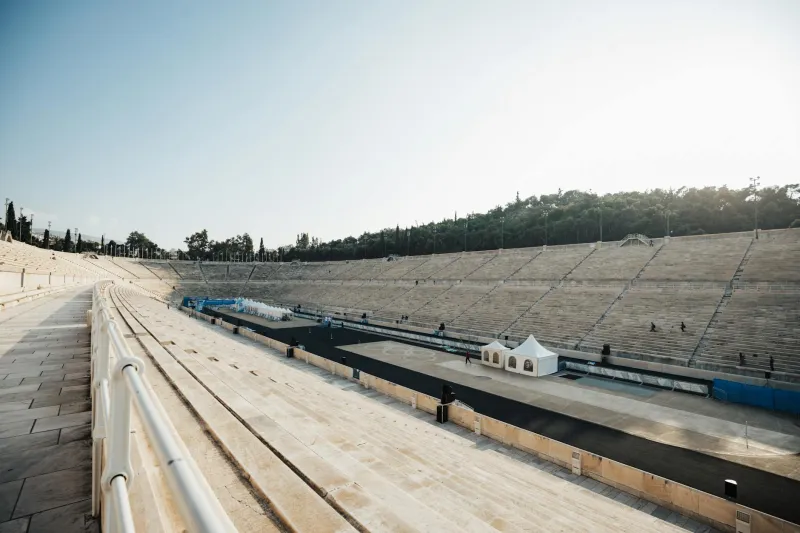
Picture this: you've just won the stadion race at the Olympic Games in ancient Olympia, your olive crown still fresh on your head. The crowd has gone home, the sacred flame has been extinguished, and you're facing a harsh reality — the next Olympics are four years away.
 Photo: Olympic Games, via www.religiousworlds.com
What do you do now?
This wasn't just a philosophical question for ancient Greek athletes. It was a practical problem that shaped the foundation of athletic training as we know it. Long before Tom Brady had an off-season workout regimen or LeBron James spent millions on body maintenance, Greek Olympians were figuring out how to stay competitive during the gaps between Games.
The solutions they developed? They're still being used in American sports today.
The Sacred Calendar System
Ancient Greece didn't just have the Olympics. They created what historians call the "periodos" — a four-year circuit of major athletic festivals. The Pythian Games at Delphi happened two years after each Olympics. The Isthmian Games near Corinth occurred twice in each Olympic cycle. The Nemean Games filled another slot.
Sound familiar? It should. This is exactly how modern American sports leagues structure their seasons and championships.
The NFL builds toward the Super Bowl every February. March Madness happens like clockwork. The World Series caps off baseball season. These aren't random dates — they're part of carefully planned competitive cycles that trace directly back to ancient Greece's festival calendar.
Greek athletes used these intermediate competitions the same way modern professionals use preseason games, tournaments, and minor league systems. They were tune-ups, testing grounds, and ways to stay sharp between the big show.
Training Through the Seasons
Here's where it gets really interesting. Ancient Greek athletes developed the world's first systematic approach to periodized training — the same concept that governs how every American athlete from high school wrestlers to Olympic swimmers structures their year.
During winter months, Greek competitors focused on building base strength and endurance. They'd haul heavy stones, practice basic techniques, and work on flexibility. Spring brought more intense, sport-specific training. Summer was competition season.
Modern sports science has proven this approach works. NFL players spend their off-season in strength training, move to skill work in spring practice, then peak for the regular season. NBA players follow similar patterns. Even college athletes structure their training around this ancient Greek template.
The Gymnasium Revolution
To support year-round training, Greeks invented something revolutionary: the gymnasium. These weren't just buildings with equipment — they were complete athletic communities where competitors could train, learn, and stay connected to their sport during the off-season.
Every major American city now has the same thing. Gold's Gym, Planet Fitness, CrossFit boxes, and private training facilities all descend from this Greek innovation. The idea that athletes need dedicated spaces to maintain their conditioning between competitions? That started in ancient Greece.
But Greek gymnasia went beyond physical training. They included libraries, lecture halls, and social spaces. Athletes studied philosophy, mathematics, and rhetoric alongside their physical preparation. The Greeks understood something modern American sports are just rediscovering — that mental training is as important as physical conditioning.
Community Support Networks
Ancient Greek athletes couldn't survive their off-seasons alone. They needed community support, and Greek city-states provided it. Successful competitors received free meals, housing, and training support during their preparation years.
This model lives on in American college athletics. Full-ride scholarships, training facilities, coaching staff, and academic support — it's all based on the Greek idea that communities should invest in their athletic champions year-round, not just during competition.
Professional sports took it even further. Team facilities stay open year-round. Players receive off-season training stipends. Coaching staffs work twelve months a year. The infrastructure that keeps modern American athletes competitive during their off-seasons is a direct descendant of ancient Greek civic support systems.
The Mental Game
Greek athletes also pioneered what we now call sports psychology. During their off-seasons, they practiced visualization, studied their competitors, and worked with teachers who helped them develop mental toughness.
They called it "sophrosyne" — a balanced state of mind that combined confidence with self-control. Modern American athletes call it "being in the zone," but the concept is identical.
Tom Brady's famous mental preparation routines, Kobe Bryant's obsessive film study, Serena Williams' visualization techniques — these all trace back to practices that Greek athletes developed to stay mentally sharp between Olympic cycles.
The Lasting Legacy
When you watch an NFL player post workout videos on Instagram during the off-season, or see college basketball teams practicing in July, or follow a marathon runner's winter training blog, you're witnessing the continuation of a tradition that started in ancient Greece.
The Greeks figured out that champions aren't made during competition — they're made during the long months of preparation in between. They created training systems, support structures, and mental approaches that kept athletes competitive across four-year cycles.
American sports didn't just adopt these ideas — we perfected them. But the blueprint was drawn 2,800 years ago in ancient Olympia, by athletes facing the same challenge that drives every competitor today: how do you stay a champion when the games aren't being played?
The answer, it turns out, is the same now as it was then. You treat the off-season like it matters just as much as the competition itself.