The Unbreakable Champion: How One Ancient Wrestler Dominated for Three Decades
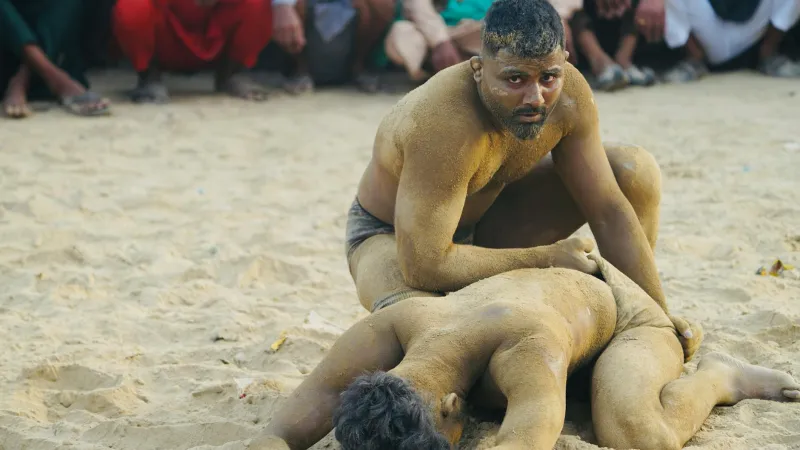
Imagine an athlete so dominant that they won their sport's highest honor six times across nearly three decades. Now imagine they did it without modern training facilities, nutritionists, or sports science. Meet Milo of Croton, the ancient Greek wrestler whose winning streak makes Tom Brady's Super Bowl runs look like a brief hot streak.
The Numbers That Don't Make Sense
Milo's resume reads like something out of mythology. Six Olympic victories in wrestling. Twelve Pythian Games titles. Ten Isthmian Games championships. Nine Nemean Games wins. His competitive career spanned from roughly 540 to 512 BC, meaning he was beating opponents for nearly 28 years straight.
To put this in perspective, Michael Phelps dominated swimming for about 12 years at the elite level. Serena Williams ruled tennis for roughly 15 years. Tiger Woods had his peak decade. Milo? He was untouchable for almost three decades.
"There's literally no modern comparison," explains Dr. Sarah Mitchell, a sports historian at UCLA. "The closest we get is maybe Bill Russell's 11 NBA championships in 13 years, but that's a team sport. Milo was out there alone, man versus man, for generation after generation."
The Bull Training Method That Started a Revolution
What made Milo unstoppable wasn't just natural talent — it was his training philosophy that was centuries ahead of its time. According to ancient sources, Milo developed what we now call progressive overload training by carrying a newborn calf on his shoulders every day. As the calf grew into a full-sized bull, Milo's strength increased proportionally.
This story might sound like ancient fiction, but the principle is pure modern sports science. Progressive overload — gradually increasing weight, frequency, or intensity — is the foundation of every strength training program today. Milo figured this out 2,500 years before we had gyms.
"He was essentially doing what every powerlifter and strongman competitor does now," says former Olympic wrestling coach Mike Thompson. "The only difference is he was using livestock instead of barbells."
Milo's daily routine reportedly included carrying the bull, then slaughtering and eating the entire animal in one sitting. While the eating part might be exaggerated (that's roughly 1,000 pounds of meat), it shows how ancient Greeks understood that elite athletes needed extraordinary nutrition.
When Winning Became Expected
By his third Olympic victory, Milo wasn't just beating opponents — he was psychologically breaking them before matches even began. Ancient accounts describe competitors forfeiting rather than face him. At one Olympics, he reportedly won by default because no one would wrestle him.
This level of dominance created a different kind of pressure than modern athletes face. Today's champions deal with constant media scrutiny and social media criticism. Milo had to handle something potentially worse: the expectation that he was literally unbeatable.
"Imagine if everyone expected LeBron James to win every single game for 28 years," Mitchell notes. "That's the psychological weight Milo carried. One loss would have shattered the myth."
The End of an Era
Milo's streak finally ended not in competition, but in a moment of hubris that became legendary. According to Pausanias, the ancient Greek geographer, Milo attempted to split a tree trunk with his bare hands. His hands became trapped in the wood, leaving him helpless when wild animals attacked.
Whether this story is literally true matters less than what it represents. Milo's downfall came from overconfidence — the same trait that had made him invincible. He believed his own legend so completely that he thought he could conquer nature itself.
What Modern Champions Can Learn
Milo's career offers lessons that transcend time periods. His training methodology proves that fundamental principles of athletic development haven't changed much in 2,500 years. Progressive overload, consistent nutrition, and mental preparation remain the foundation of elite performance.
But perhaps more importantly, Milo's story shows what true athletic longevity looks like. In an era where we marvel at athletes competing into their late 30s, Milo was dominating opponents for nearly three decades. He didn't just win — he redefined what winning meant.
The Record That Will Never Fall
Today's sports are too competitive, too global, and too analyzed for any single athlete to dominate for 28 years. The talent pools are deeper, the margins thinner, and careers shorter due to physical demands.
Milo of Croton remains the gold standard for athletic dominance not just because of what he accomplished, but because of when he did it. In an age without sports science, he created sports science. In an era without professional training, he became the ultimate professional.
His legacy isn't just about wrestling — it's about the pursuit of perfection. Every time a modern athlete talks about "getting one percent better every day," they're channeling the spirit of a man who carried a growing bull on his shoulders, meal by meal, day by day, until he became unbeatable.
That's the kind of dedication that builds legends. And after 2,500 years, Milo's legend remains unmatched.