Before Gyms Existed: The Ingenious Ways Ancient Greeks Forged Olympic Champions
The Original Training Ground
Walk into any modern Olympic training facility and you'll find million-dollar equipment, altitude chambers, and sports scientists monitoring every heartbeat. But 2,800 years ago in ancient Greece, the world's first Olympic champions were forged in dusty courtyards with nothing but sand, stones, and sheer determination.
The ancient Greeks didn't just stumble into athletic greatness—they developed a systematic approach to physical preparation that was centuries ahead of its time. Their methods were so effective that many principles still form the backbone of modern athletic training.
Sand, Sweat, and Strategy
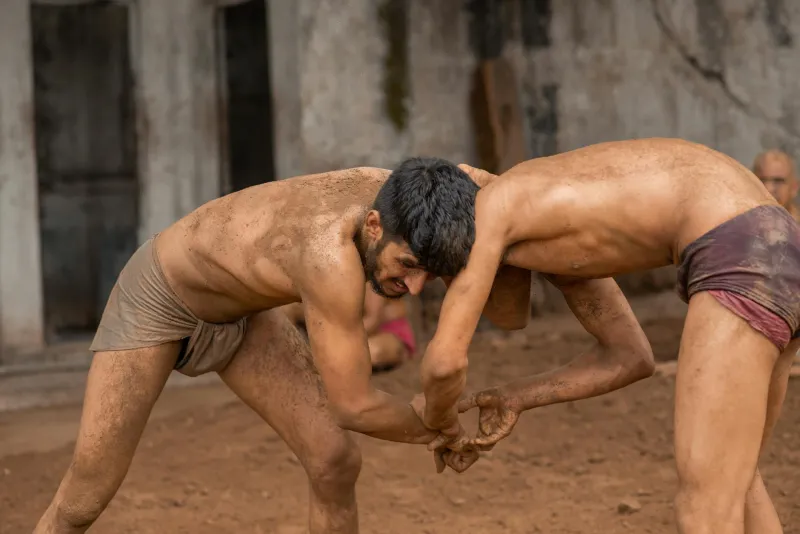
The centerpiece of ancient Greek athletic preparation was the palaestra—a rectangular courtyard surrounded by covered walkways where athletes spent their days. Picture a combination of gym, classroom, and social club, all rolled into one dusty training ground.
Instead of treadmills, athletes ran through deep sand that made every stride a battle against resistance. This wasn't just running—it was full-body conditioning that built the explosive power needed for sprinting and jumping events. Modern track coaches still use sand running for the same reason: it forces athletes to drive their knees higher and pump their arms harder than running on solid ground.
For strength training, Greek athletes didn't need barbells. They lifted heavy stones of various sizes, carried each other on their backs, and performed countless bodyweight exercises. Wrestling was considered the ultimate full-body workout, and even sprinters spent hours grappling to build functional strength.
The Science They Didn't Know They Had
What's remarkable is how scientifically sound their methods were, despite having no understanding of muscle fiber types or lactate thresholds. Ancient Greek training incorporated what we now call periodization—varying intensity and volume throughout the year to peak for competition.
Athletes would start with general conditioning, gradually increase the intensity of sport-specific work, then taper before major competitions. Sound familiar? It's essentially the same framework used by every Olympic coach today.
They also understood recovery in ways that put many modern athletes to shame. Training was followed by oil massages, hot baths, and strategic rest periods. The Greeks knew that adaptation happened during recovery, not just during the workout itself.
Diet Without Supplements
Ancient Olympic athletes followed strict nutritional regimens, but their "sports drinks" were water mixed with honey, and their "protein bars" were figs and cheese. The most famous dietary protocol was the "meat diet" introduced in the 5th century BC—athletes would consume massive amounts of meat (unusual for average Greeks) to build strength and size.
One legendary wrestler, Milo of Croton, supposedly ate 20 pounds of meat, 20 pounds of bread, and drank 18 pints of wine daily. While these numbers are likely exaggerated, they show that ancient Greeks understood the connection between nutrition and performance long before anyone knew what protein synthesis meant.
Mental Training That Modern Sports Psychology Borrowed
The Greeks didn't separate physical and mental preparation. Athletes spent hours visualizing their events, studying opponents, and practicing under pressure. They understood that competition was as much mental as physical—a concept that didn't become mainstream in modern sports until the 1970s.
Philosophers like Aristotle wrote about the importance of mental discipline in athletics. Greek athletes practiced controlling their emotions, focusing under pressure, and maintaining confidence—techniques that modern sports psychologists package as "cutting-edge" mental training.
The Technology Gap That Wasn't
Compare a modern Olympic sprinter's 9.58-second 100-meter world record to the ancient stadion race, and it's easy to assume technology explains everything. But strip away the track surface, starting blocks, and carbon fiber spikes, and you still see athletes who were remarkably well-conditioned.
Ancient Greek athletes achieved their results through principles that remain unchanged: progressive overload, sport-specific training, proper recovery, and mental preparation. What's changed isn't the foundation—it's the precision with which we can apply these concepts.
Lessons From Olympia's Training Ground
Modern sports science has given us incredible tools to measure, monitor, and optimize performance. We can track oxygen uptake, analyze biomechanics frame by frame, and design nutrition plans down to the gram. But the ancient Greeks proved that the most important factor in athletic development isn't technology—it's consistent application of sound training principles.
Their methods remind us that human performance isn't just about having the latest equipment or most advanced facility. It's about showing up every day, pushing your limits, and treating your body as both a machine to be optimized and an art to be perfected.
The next time you see an Olympic athlete break a world record, remember that their achievement stands on a foundation built in ancient Greece—where champions were made not by machines, but by the timeless combination of hard work, smart training, and unwavering dedication.