Ancient Roots, American Games: Where Your Favorite Sports Really Came From
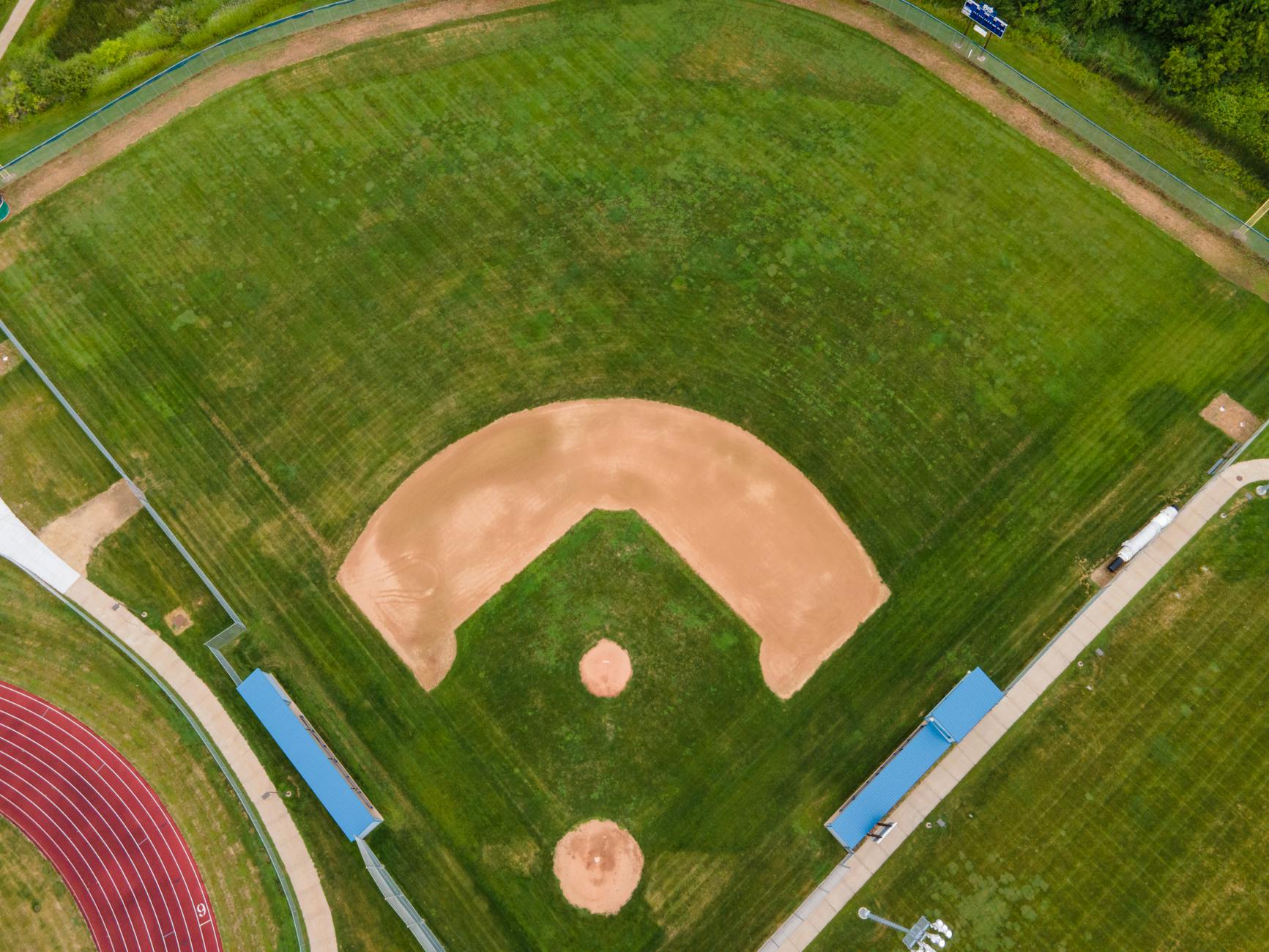
America loves its sports. On any given Sunday you'll find half the country glued to football, debating fantasy lineups, and yelling at referees through their televisions. Come summer, baseball takes over. Basketball runs basically year-round. And every four years, the whole country suddenly becomes deeply passionate about track and field and swimming for about three weeks.
We tend to think of these sports as American inventions — products of gyms in Springfield, Massachusetts, sandlots in rural Ohio, and packed stadiums from Green Bay to Los Angeles. And in their modern forms, they are American. But the competitive impulses that built them? Those go back a lot further than the NFL Draft.
Here are seven sports America loves — and the surprisingly ancient traditions that gave birth to them.
1. Wrestling: The Sport That Was Already Old When the Olympics Were Young
The modern version: Collegiate and Olympic wrestling, with its weight classes, time limits, and technical scoring, is a highly refined competitive discipline. It's also one of the most consistently successful sports for Team USA at the Olympics.
The ancient connection: Wrestling (palé in Greek) was one of the signature events of the ancient Olympic Games and was part of the pentathlon as early as 708 BC. Greek wrestlers competed in a sand pit called the skamma, and the goal was to throw your opponent to the ground three times. No weight classes. No time limits. Just two men and the dirt.
The surprising parallel: The ancient Greeks believed wrestling was the sport most closely tied to intelligence and strategy — not just brute strength. They called it the "thinking man's sport." Modern wrestling coaches say the exact same thing. The ability to read an opponent's weight distribution and exploit it in a fraction of a second is as cognitive as it is physical. Turns out that insight is 2,700 years old.
2. Boxing: From Bronze-Age Knuckles to Madison Square Garden
The modern version: Professional boxing is one of America's most storied sports, with a cultural history that runs from John L. Sullivan through Muhammad Ali to the present day.
The ancient connection: Boxing (pygmachia) appeared at the ancient Olympics in 688 BC. Greek boxers wrapped their hands in leather straps called himantes — not to protect their knuckles, but to make their punches harder. There were no rounds, no ring, and no points system. You fought until someone surrendered or couldn't continue.
The surprising parallel: The ancient Greeks had a version of boxing that was considered the most dangerous event at the Games, partly because there was no way to win on points — you had to finish the fight. The modern sport has moved far away from that, but the enduring cultural fascination with the knockout — the definitive, undeniable ending — is a direct echo of the ancient format. Americans don't just want to see a decision. They want to see someone put down. The Greeks would have understood completely.
3. Track and Field: The Oldest Sport on Earth Is Still the Centerpiece of the Olympics
The modern version: Track and field encompasses sprints, distance races, hurdles, jumps, and throws. It's the backbone of the Olympic program and the sport that produces the most-watched moment of every Games — the 100-meter final.
The ancient connection: Track and field is the ancient Olympics. The stadion sprint was the only event at the first recorded Games in 776 BC. The long jump, discus, and javelin were part of the pentathlon by the early 700s BC. Ancient Greek athletes weren't doing track as a hobby. It was the highest form of athletic competition in the known world.
The surprising parallel: The discus throw is perhaps the most visually unchanged sport in Olympic history. The technique, the rotation, the release — it's all depicted in extraordinary detail in ancient Greek sculpture, most famously in the Discobolus, a statue created around 450 BC. Show a modern discus thrower a photo of that statue and they'll recognize the position immediately. The sport has been refined over 2,500 years, but the fundamental movement hasn't changed at all.
4. Swimming: Ancient Waters, Modern Lanes
The modern version: Competitive swimming is one of America's strongest Olympic sports, producing legends from Johnny Weissmuller to Mark Spitz to Michael Phelps, the most decorated Olympian in history.
The ancient connection: Swimming wasn't an Olympic event in ancient Greece, but it was deeply embedded in Greek and Roman military and athletic culture. Greek soldiers were expected to swim in full armor. Roman baths were centers of both leisure and physical training. The phrase "he can neither read nor swim" was a Roman insult for the completely uneducated.
The surprising parallel: The Romans built elaborate heated pool complexes called natatio as part of their public baths. These weren't just for washing — they were for exercise, competition, and socializing. Sound familiar? The modern American rec center, with its lap pool and competitive swim teams, is structurally almost identical to a Roman thermae. We basically reinvented the Roman bath and put it in every suburb in the country.
5. Football: Violence, Territory, and Very Old Instincts
The modern version: The NFL is the most financially successful sports league on the planet. Football is America's game in a way that no other sport quite matches.
The ancient connection: Football doesn't have a clean ancient analog, but the competitive elements that define it — territorial conquest, physical dominance, strategic formation — echo ancient Greek and Roman military sports and training games. The Romans played a game called harpastum, a rough ball game involving small teams fighting to control a ball across a field. Ancient accounts describe it as physically brutal and tactically complex.
The surprising parallel: Harpastum was reportedly used by Roman legions as a training exercise to build aggression, teamwork, and physical toughness. The Roman military used a ball game to make better soldiers. The modern football coach uses the sport to build the same qualities — discipline, controlled aggression, unit cohesion. The ball is different. The philosophy is identical.
6. Baseball: America's Pastime Has Some Very Unexpected Cousins
The modern version: Baseball is woven into American cultural identity in a way that goes beyond sport. It's the backdrop of summer, the subject of literature, and the game that more than any other carries the weight of American nostalgia.
The ancient connection: Bat-and-ball games have appeared in cultures across the ancient world, from Egyptian wall paintings depicting a pharaoh striking a ball with a stick to Roman games involving clubs and thrown objects. The direct lineage of baseball runs through English games like rounders and cricket, but the underlying concept — projectile, striker, territory — is ancient.
The surprising parallel: Ancient Egyptian depictions of a ritual ball game date to approximately 1400 BC. The game involved a priest striking a ball while others attempted to catch or retrieve it. It was ceremonial, not competitive, but the physical action is recognizable. Humans have apparently been hitting thrown objects with sticks for at least 3,400 years. America just figured out how to make a nine-inning version of it.
7. Basketball: The Newest Sport With the Oldest Instincts
The modern version: Basketball was invented in 1891 by Dr. James Naismith in Springfield, Massachusetts — making it the most precisely dated origin story in major American sports. The NBA is now a global cultural force.
The ancient connection: The Mesoamerican ball game, played by the Olmec, Maya, and Aztec civilizations for over 3,000 years, involved players propelling a rubber ball through a stone ring mounted on a wall — using only their hips, knees, and elbows. The goal was to pass a ball through an elevated hoop. Sound familiar?
The surprising parallel: Naismith almost certainly didn't know about the Mesoamerican ball game when he nailed a peach basket to a gymnasium balcony in 1891. But the core concept — get the ball through the elevated target — is so fundamental to human spatial competition that two completely separate civilizations, thousands of miles and thousands of years apart, invented essentially the same game. Some ideas are just built into us.
The Takeaway
America didn't invent competition. Nobody did. The drive to run faster, hit harder, lift more, and outlast the person across from you is as old as the species. What America did was take those ancient impulses, add professional leagues, television contracts, and a whole lot of marketing, and turn them into the sports culture we have today.
Next time you're watching the Super Bowl or catching a swim meet at the Olympics, remember: you're not just watching modern entertainment. You're watching the latest chapter in a story that started on a dirt track in ancient Greece.