David vs. Goliath Was the Rule: Why Ancient Olympics Had No Weight Classes and What It Taught Us About Fair Play
When Size Didn't Matter (Because It Had To)
Imagine walking into a UFC octagon where Daniel Cormier has to fight someone the size of Demetrious Johnson. Or picture a boxing match where Mike Tyson in his prime faces off against a welterweight. Sounds insane, right?
Welcome to ancient Olympic combat sports, where this happened every single time.
For over a thousand years, Olympic wrestling, boxing, and pankration (their version of mixed martial arts) operated under one simple rule: if you showed up, you fought whoever else showed up. No weight classes. No size divisions. No "that's not fair" complaints.
A 130-pound goat herder from the mountains could find himself grappling with a 250-pound blacksmith from Athens. And sometimes — just sometimes — the little guy won.
The All-Comers Mentality
This wasn't an oversight or primitive thinking. Ancient Greeks deliberately designed their combat sports this way because they believed in something we've largely abandoned in modern American athletics: the idea that true champions should be able to beat anyone, regardless of physical advantages.
To Greeks, combat sports weren't just athletic competitions — they were tests of complete human excellence. They called it "arete," which meant being the best possible version of yourself. If you could only beat people your own size, were you really the best?
This philosophy created some legendary David-and-Goliath moments. Historical records tell us about Melesias of Athens, a relatively small wrestler who defeated much larger opponents through superior technique and strategy. His victories became the stuff of legend precisely because he overcame what seemed like impossible physical disadvantages.
 Photo: Melesias of Athens, via images.greece.com
The Brutal Beauty of Ancient Boxing
Ancient Olympic boxing makes modern heavyweight fights look like pillow fights. Competitors wrapped their hands in leather strips called "himantes" — basically ancient boxing gloves designed more for grip than protection. No rounds, no breaks, no referee stopping the fight if someone was getting pummeled.
You fought until someone gave up, got knocked out, or occasionally died.
Without weight classes, strategy became everything. Smaller fighters couldn't rely on power, so they developed incredible defensive skills, footwork, and endurance. They'd wear down bigger opponents, use superior conditioning, and strike with surgical precision.
Sound familiar? That's exactly how Floyd Mayweather built his career — using movement, defense, and ring IQ to neutralize bigger, stronger opponents. The ancient Greeks invented that playbook.
Wrestling: The Great Equalizer
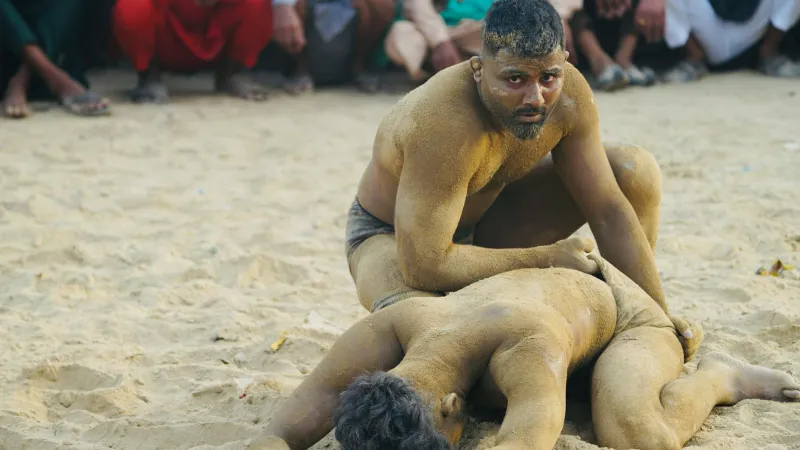
Olympic wrestling in ancient Greece was even more brutal than boxing. Called "pale," it combined elements of what we now call freestyle wrestling, judo, and submission grappling. Competitors fought naked, covered in olive oil, on sand that quickly turned to mud.
Again, no weight divisions. But here's where it gets interesting — wrestling became the sport where size mattered least. Technique, leverage, and mental toughness could overcome raw strength.
The greatest ancient wrestler was probably Milo of Croton, who won six Olympic wrestling titles over 24 years. But Milo wasn't just big — he was technically superior. Historical accounts describe him using complex throws, joint locks, and ground control that wouldn't look out of place in a modern NCAA wrestling match.
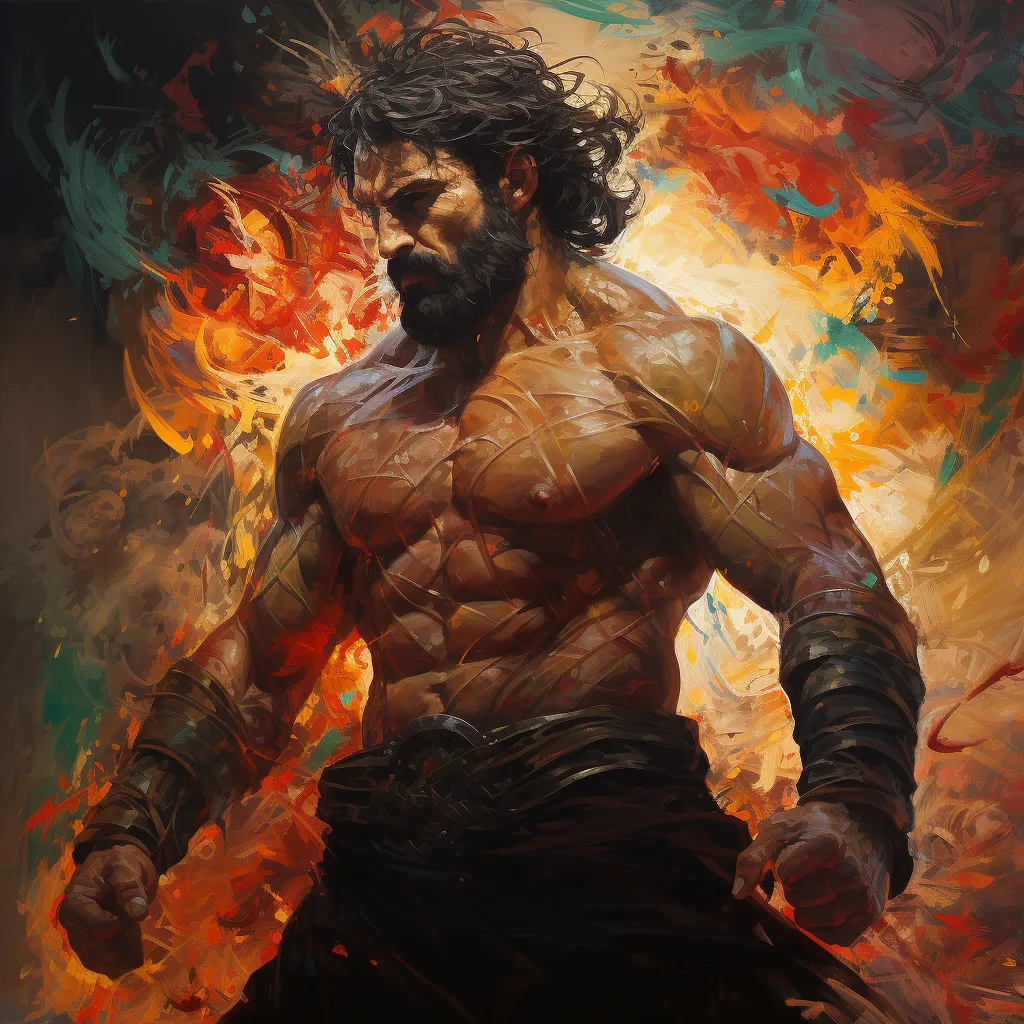 Photo: Milo of Croton, via spiralworlds.com
Pankration: The Original MMA
Then there was pankration — "all powers" — which combined boxing, wrestling, and submission holds into something that looked remarkably like modern mixed martial arts. Except, once again, with no weight classes.
Pankration fighters had to master every aspect of combat because they never knew what size opponent they'd face. Small fighters became submission specialists. Big fighters learned to use their reach and power efficiently. Medium-sized fighters developed well-rounded games that could adapt to any opponent.
This created incredibly complete athletes. When modern MMA emerged in America during the 1990s, it took years for fighters to develop the multi-disciplinary skills that ancient pankration competitors had by necessity.
The Turning Point: When America Changed the Rules
So why did we abandon the all-comers format? The answer lies in how American sports evolved during the late 1800s and early 1900s.
As boxing became professional entertainment rather than pure athletic competition, promoters realized that mismatched fights were bad for business. Fans didn't want to watch obvious beatdowns — they wanted competitive matches where either fighter could win.
Weight classes were introduced to create more entertaining fights, not necessarily fairer ones. The first official weight divisions in American boxing appeared in the 1880s, coinciding with the sport's transition from bare-knuckle brawling to gloved entertainment.
Wrestling followed suit when it became an organized collegiate sport. The NCAA introduced weight classes in 1928, arguing that it would increase participation and reduce injuries. They were probably right — but they also fundamentally changed what the sport tested.
What We Gained and Lost
Modern weight classes in American combat sports created obvious benefits. More athletes can compete at elite levels. Injuries decreased. Competition became more predictable and entertaining.
But we also lost something the ancient Greeks valued: the test of absolute supremacy. When Jon Jones fights at light heavyweight, we know he's the best 205-pound fighter. But is he the best fighter, period? We'll never know, because he'll never face Francis Ngannou or Stipe Miocic.
Ancient Olympic champions didn't have that ambiguity. When someone won Olympic wrestling, they were the best wrestler in the world, regardless of size. Period.
The Modern Echo
Interestingly, American combat sports are slowly moving back toward the ancient model. Early UFC events had no weight classes — anyone could fight anyone. While the sport eventually adopted weight divisions for safety and entertainment reasons, we still celebrate fighters who move between weight classes successfully.
When fighters like BJ Penn or Conor McGregor win titles in multiple weight divisions, they're channeling something ancient — the idea that true champions should be able to beat different types of opponents, not just people who happen to weigh the same amount.
The Deeper Lesson
The ancient Greek approach to combat sports reveals something profound about how we think about fairness in competition. They believed that true excellence meant overcoming any obstacle, including physical disadvantages you couldn't control.
Modern American sports take a different approach — we try to create level playing fields where success depends primarily on skill, training, and mental toughness rather than genetic lottery.
Both philosophies have merit. Ancient Greeks produced legendary athletes whose victories meant something absolute. Modern Americans created systems where more people can compete and excel.
But maybe there's wisdom in remembering what those ancient warriors understood: sometimes the greatest victories come not from beating people just like you, but from proving you can beat anyone who steps up to challenge you, regardless of what advantages they might have.
In a world where we increasingly sort ourselves into comfortable categories, the ancient Olympic ideal of facing all comers might be more relevant than ever.