The Ancient Playbook: How Olympic Greece Wrote the Rulebook Every American Sports League Still Uses
The Original Commissioner's Office
Every fall, when Roger Goodell steps to the podium for his State of the NFL address, he's channeling something ancient. The centralized authority, the standardized rules, the careful scheduling of competitions across multiple venues — none of this emerged from modern business thinking.
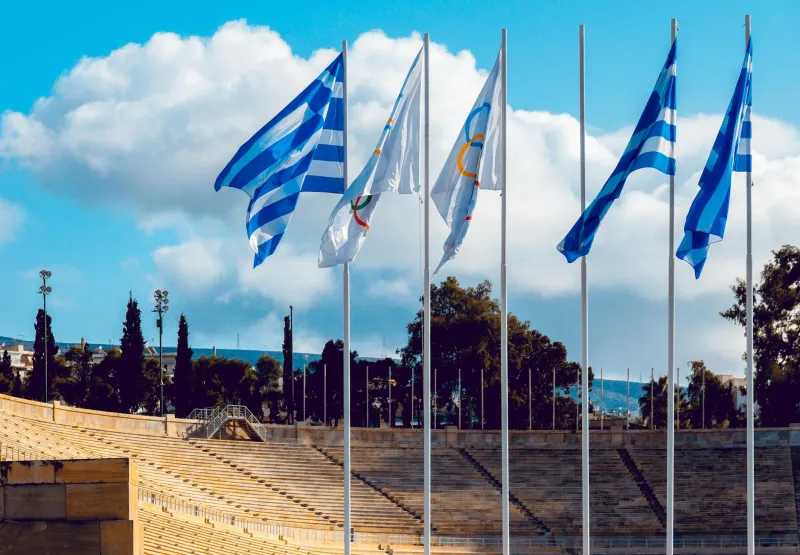
It all started in a sacred grove in ancient Olympia, where Greek officials called "Hellanodikai" (judges of the Greeks) created the world's first comprehensive system for organizing large-scale athletic competition.
These weren't just referees keeping score. They were the original sports commissioners, developing administrative frameworks so sophisticated that American professional leagues still use their basic structure today.
Eligibility Rules: The First Player Personnel Departments
Long before the NFL had complicated rules about draft eligibility and roster management, ancient Olympic organizers faced a similar challenge: how do you determine who gets to compete?
The Greeks developed the world's first systematic eligibility requirements. Competitors had to be free-born Greek males who could prove their citizenship and had never been convicted of a serious crime. They needed to swear sacred oaths that they'd trained for at least ten months before competition.
Sound familiar? Modern American sports leagues use remarkably similar frameworks. The NFL requires players to be at least three years removed from high school. The NBA has age minimums and amateur status rules. College athletics has entire departments dedicated to eligibility compliance.
The Greeks even invented the concept of amateur status that governed American college sports for over a century. Olympic competitors couldn't receive money for their athletic performances — though, like modern college athletes, they could accept certain types of support from their communities.
The Draft System's Ancient Roots
Here's where it gets really interesting. Ancient Olympics didn't just let everyone who qualified compete in every event. They had to manage field sizes, balance competition levels, and ensure fair matchups.
For boxing, wrestling, and pankration, they used a system called "kleros" — essentially drawing lots to determine matchups and brackets. Competitors would draw bronze tokens from a silver urn, and identical tokens would be paired together for first-round matches.
This is the direct ancestor of every bracket system in American sports, from March Madness to NFL playoff seeding. But it goes deeper than that.
The Greeks also used geographical representation principles when selecting competitors for certain events. City-states could send limited numbers of athletes, and organizers tried to ensure broad representation from across the Greek world.
That's basically the NFL draft system. Teams get picks based on their previous performance (draft order), there are limits on how many players each team can select (roster limits), and the system is designed to maintain competitive balance across the league.
Scheduling: The Original Season Structure
American sports fans take scheduling for granted. The NFL plays 17 games over 18 weeks, followed by playoffs. MLB has 162 games across six months. The NBA runs from October to June.
These aren't random numbers — they're based on organizational principles the Greeks established for Olympic competition.
Ancient Olympics ran for exactly five days, with specific events scheduled at specific times. Day one was opening ceremonies and qualifying rounds. Days two and three featured different categories of competition. Day four was the premier events. Day five was closing ceremonies and victory celebrations.
This structure — opening festivities, preliminary rounds, main competition, championship events, closing celebration — is identical to how modern American sports leagues organize their seasons and playoffs.
The Greeks even invented the concept of "prime time" scheduling. The most important events (chariot racing, the stadion sprint, wrestling finals) were scheduled for times when the largest crowds could attend.
Conference Systems and Regional Divisions
The NFL has AFC and NFC conferences. The NBA has Eastern and Western conferences. MLB has American and National leagues. These divisions seem like modern business decisions, but they're actually based on ancient Greek organizational models.
The Olympic Games were part of a larger system called the "Panhellenic Games" — four major athletic festivals that rotated through different regions of Greece. Each had its own character, specialties, and regional focus, but they were all part of an integrated competitive system.
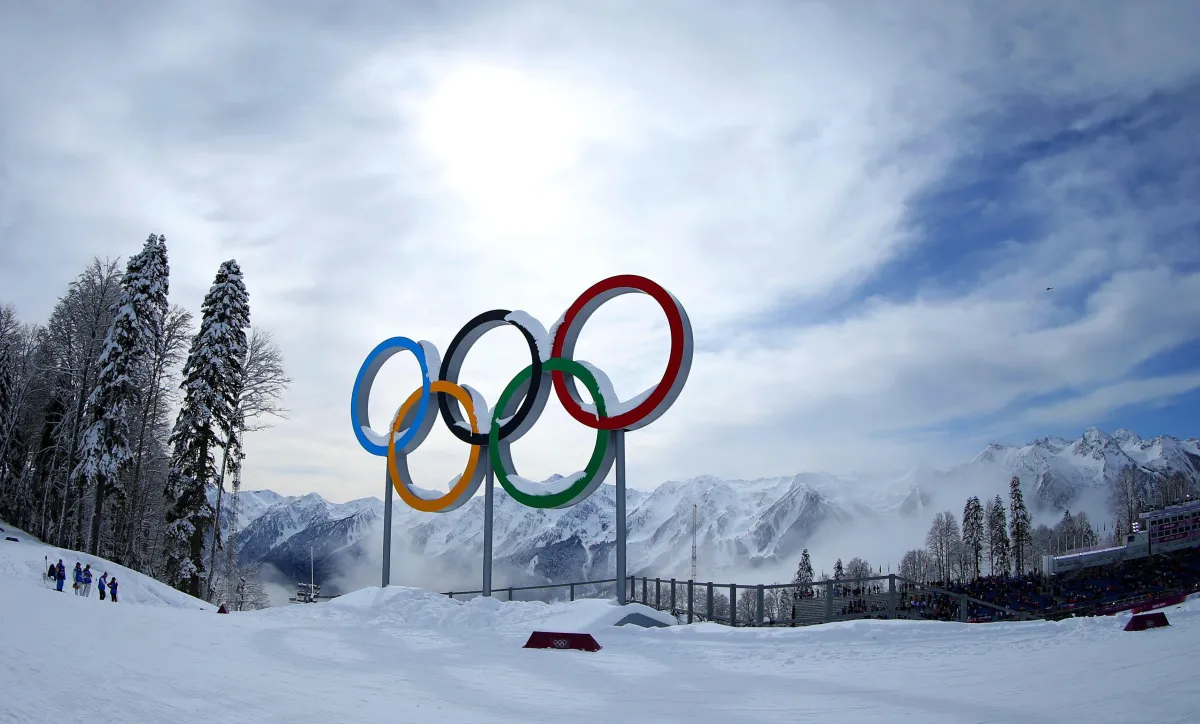 Photo: Olympic Games, via wallpaperaccess.com
The Pythian Games at Delphi emphasized music and poetry alongside athletics. The Isthmian Games near Corinth focused on naval traditions. The Nemean Games had their own unique events and customs.
This is exactly how modern American sports leagues use conferences and divisions. The AFC and NFC have different histories, playing styles, and regional identities, but they're part of one integrated system that culminates in a championship game.
Revenue Sharing and Economic Models
Ancient Olympics also pioneered concepts that modern American sports leagues use for economic management.
While individual competitors couldn't receive prize money, their home city-states could provide support, and successful athletes brought enormous economic benefits to their communities through increased trade, tourism, and prestige.
The Games themselves were funded through a combination of wealthy sponsors (called "choregoi"), civic contributions, and revenue from associated festivals and markets.
This is basically the modern American sports economic model: teams are supported by wealthy owners and corporate sponsors, cities provide infrastructure and tax benefits, and leagues generate revenue through broadcasting, merchandising, and associated entertainment.
Standardization: The Original Rulebook
Perhaps most importantly, the Greeks created the concept of standardized competition rules that applied everywhere.
Before the Olympics, athletic competitions were local affairs with local rules. One city might have different wrestling regulations than another. Sprint distances varied by location. There was no way to compare performances across different venues.
Olympic organizers changed that by establishing universal standards: exact distances for races, uniform equipment requirements, standardized competition formats, and consistent judging criteria.
This innovation made it possible to have meaningful inter-regional competition, which is the foundation of all modern American sports leagues. When the Patriots play the Chargers, both teams follow identical rules, use the same equipment standards, and compete on fields with identical dimensions.
The Broadcasting Blueprint
The Greeks even anticipated modern sports media. Olympic victors' achievements were recorded by official historians, celebrated by commissioned poets, and spread throughout the Greek world by traveling messengers.
This created the world's first sports media ecosystem: official record-keeping, celebrity athlete profiles, and systematic distribution of competition results to audiences who couldn't attend in person.
ESPN, sports talk radio, and social media coverage of American athletics all descend from this ancient Greek innovation.
The Enduring Framework
When you watch the Super Bowl, March Madness, or the World Series, you're witnessing the continuation of organizational systems that ancient Greeks created in a sacred grove 2,800 years ago.
The specific technologies have changed — we have television instead of traveling poets, computerized scheduling instead of bronze tokens, salary caps instead of amateur oaths. But the fundamental framework remains identical.
Centralized authority. Standardized rules. Systematic scheduling. Eligibility requirements. Regional representation. Economic models that balance competition with community support.
American sports didn't invent these concepts — we inherited them from ancient Olympia, refined them through centuries of experience, and scaled them to serve a continental nation instead of scattered city-states.
The next time you complain about NFL scheduling, debate college playoff brackets, or argue about draft lottery odds, remember: you're participating in a conversation that started in ancient Greece, where the world's first sports commissioners figured out how to turn athletic competition into organized, sustainable, large-scale entertainment.
They wrote the playbook. We're still running the same plays.