6 Ancient Olympic Events That Would Break the Internet — And Probably Several Laws
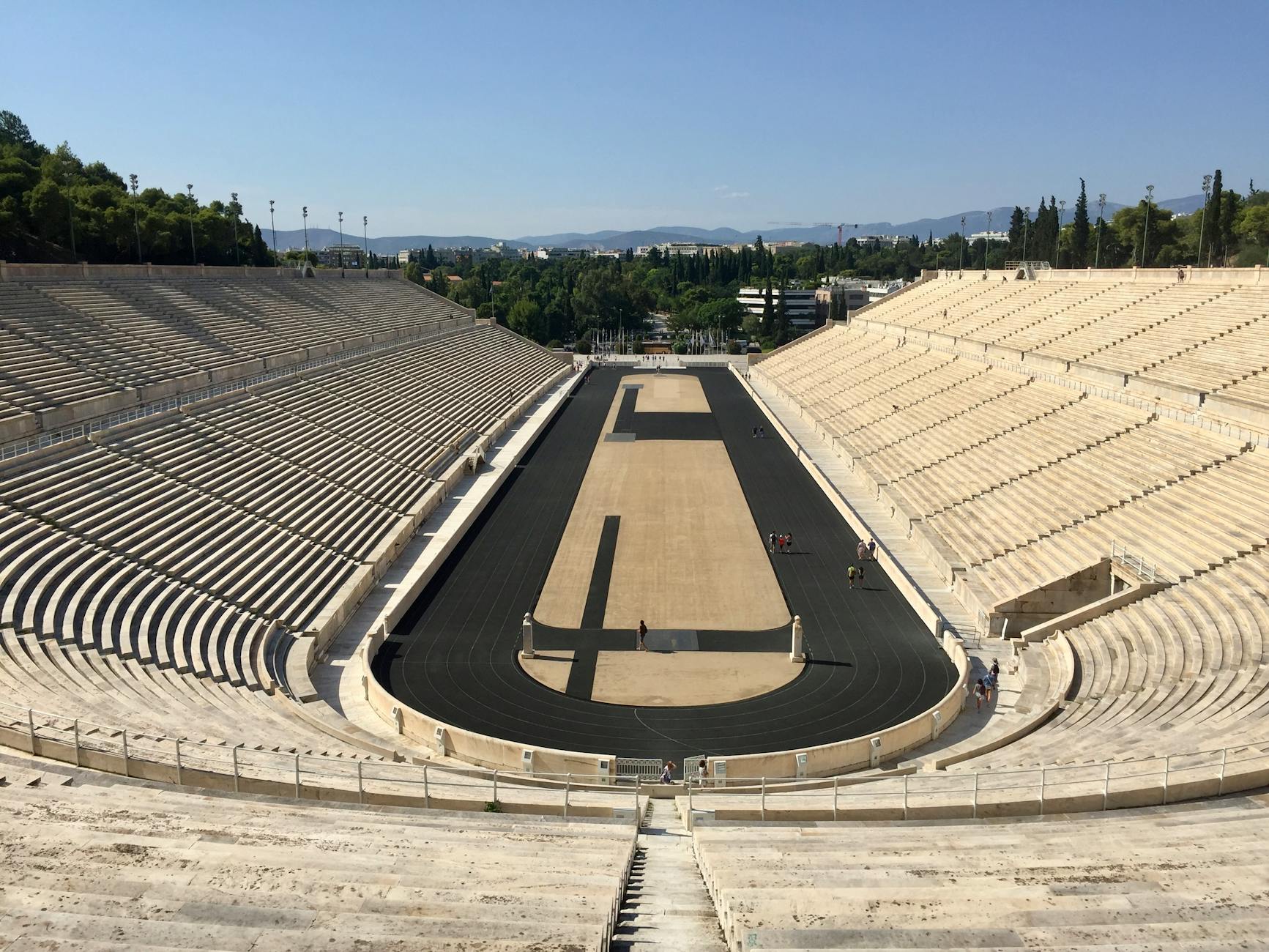
We tend to think of the Olympic Games as a celebration of the best in human athletic achievement — a global festival built on fair play, sportsmanship, and the occasional inspirational slow-motion montage. And that's mostly true, today.
But spend a little time with the ancient version of the Games, and you'll find something considerably more chaotic. The Olympics that ran from 776 BC until roughly 393 AD weren't just athletic competitions. They were spectacles — and the crowds at Olympia had a high tolerance for things going sideways.
Here are six events from the ancient Games that would never survive the modern American sports landscape. Some are brutal. Some are just deeply weird. All of them are real.
1. The Pankration: MMA With No Referee and No Rules
Let's start with the one that makes everything else look tame.
The pankration was a full-contact combat sport that combined wrestling and striking into something that had almost no restrictions. Competitors could punch, kick, choke, bend joints, and throw their opponents in essentially any configuration they could manage. The two things that were technically prohibited: biting and gouging out eyes. And ancient sources suggest those rules weren't always strictly enforced.
Matches ended when one athlete submitted — by tapping out or raising a finger — or was rendered unconscious. Death, while not the goal, was not unheard of. One champion, Arrhichion of Phigalia, reportedly won his final pankration match while dying. His opponent submitted from a joint lock just as Arrhichion expired. He was declared the winner posthumously. The Greeks thought this was awesome.
In the United States today, the UFC operates under a detailed ruleset that prohibits roughly 30 specific actions. The ancient pankration had two rules, loosely enforced. Even the most aggressive sports commission in America would take one look at this event and start drafting cease-and-desist letters.
2. The Chariot Race: Spectacular, Lethal, and Deeply Unfair
The hippodrome events — horse and chariot racing — were the glamour competitions of the ancient Olympics. They were also the ones most likely to kill someone.
The chariot race, or tethrippon, involved four-horse teams navigating a course with sharp turns at each end. Crashes were common. Pile-ups involving multiple chariots were not unusual. Ancient accounts describe races in which only a single chariot out of dozens finished intact. The poet Pindar wrote enthusiastically about this.
Here's the twist that would really confuse a modern American sports fan: the winner wasn't the driver. It was the owner of the horses. Wealthy patrons — including women, who were otherwise barred from even watching the Games — could enter teams and claim Olympic victory without setting foot in the hippodrome. Alcibiades, the controversial Athenian statesman, entered seven chariots in a single Olympic race and reportedly finished first, second, and fourth.
Imagine the owner of an NFL franchise being handed the Super Bowl trophy instead of the quarterback. That's more or less what was happening here.
3. The Hoplitodromos: Running in Full Armor
The stadion, the ancient Olympics' original event, was a straightforward sprint of roughly 200 meters. Fast, clean, athletic. No problem there.
The hoplitodromos was the same race, except competitors wore a bronze helmet, bronze shin guards, and carried a heavy military shield. The armor could weigh upwards of 50 pounds.
This wasn't a novelty event. It was taken seriously as a test of military fitness, and it reflected the ancient Greek understanding that athletic competition existed in service of warfare readiness. The spectacle of armored men sprinting at full speed — and occasionally colliding when shields shifted — was apparently very entertaining.
Modern American road races do have their costume categories. But the insurance liability alone would make a nationally sanctioned armor sprint essentially impossible. Also, the finish line photos would be incredible.
4. The Pentathlon: Five Events, One Brutal Day
The ancient pentathlon combined the discus, javelin, long jump, running, and wrestling into a single competition. In concept, it's not so different from the modern decathlon — a test of the complete athlete.
In practice, the ancient version was considerably more violent. The wrestling component wasn't just a tiebreaker; it was a full contact event contested by men who had already spent a day throwing heavy objects and sprinting. The scoring system isn't fully understood by historians, but it appears the competition could culminate in a wrestling match that effectively decided the overall winner.
The long jump also used hand-held weights called halteres, which jumpers swung forward to increase momentum. Whether this actually worked biomechanically is still debated, but the image of athletes launching themselves through the air while gripping lead weights is undeniably compelling.
5. Boxing: No Rounds, No Judges, No Mercy
Ancient Greek boxing, or pygmachia, operated on a simple principle: you fought until someone couldn't continue. There were no rounds. No points. No judges scoring knockdowns.
Competitors wore leather straps called himantes around their hands — not padded gloves designed to protect, but hardened strips meant to add force to blows. Later versions incorporated harder materials that functioned more like weapons than protective gear.
Matches could last hours. If neither fighter had been decisively beaten, there was a provision for both competitors to stand still and trade blows until one gave up. No movement, no defense — just endurance.
American boxing has its own complicated relationship with athlete safety, but it operates under a framework of medical oversight, round limits, and referee intervention that would have been completely alien to the ancient Greeks. The sport they practiced was closer to a controlled street fight than anything currently sanctioned by a state athletic commission.
6. The Stadion — Naked
Finally, a reminder that even the most straightforward ancient Olympic event came with a detail that would require significant regulatory adjustment in the modern era.
All ancient Olympic competitors competed in the nude. This wasn't considered unusual — it was the standard. The word "gymnasium" derives from the Greek gymnos, meaning naked. Athletic nudity was culturally normalized and considered aesthetically appropriate for the display of the trained male body.
The reasons for this tradition are debated among historians. Some sources attribute it to practicality (avoiding tangled clothing), others to aesthetic ideals, and others to a specific historical incident involving a runner whose loincloth came loose mid-race. Whatever the origin, it was standard practice for over a thousand years.
Modern American sports broadcasting has very specific rules about this sort of thing. The FCC would be involved almost immediately.
What These Events Tell Us
It's easy to look at this list and laugh — and honestly, some of it is pretty funny. But these competitions weren't fringe entertainment. They drew enormous crowds to Olympia from across the Greek world for over a millennium. They were taken seriously as expressions of human excellence, military readiness, and civic pride.
What's changed isn't human appetite for spectacle. American audiences pack stadiums for contact sports, tune in for combat sports, and consume highlight reels built around the most violent and dramatic moments in competition. The appetite is the same.
What's different is the framework — the rules, the medical oversight, the liability structures, and the cultural norms that shape which expressions of athletic competition we decide to celebrate.
The ancient Greeks drew their lines in different places than we do. That's not a judgment on them or on us. It's just a reminder that the rules of sport are never fixed — they're always a reflection of the society that writes them.
And somewhere out there, a pankration fan is reading this and thinking the modern version is the one that's gone soft.