America's Ancient Throwing Tradition: How Greek Warriors Created Your High School's Most Grueling Events
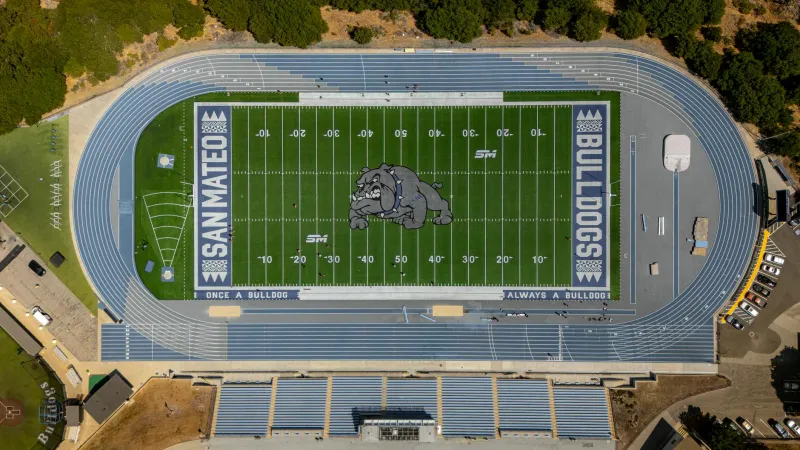
Walk onto any American high school track in spring, and you'll witness something remarkable: teenagers hurling 16-pound balls, spinning metal discs through the air, and whipping hammers in circles with the intensity of ancient warriors. They probably don't realize they're participating in a ritual that connects them directly to Greek soldiers preparing for battle 2,500 years ago.
The throwing events—shot put, discus, and hammer throw—represent the most direct link between ancient Olympic competition and modern American athletics. While sprinting and jumping have been refined and revolutionized by technology, throwing events remain fundamentally unchanged: human strength and technique launching objects as far as physics allows.
When Throwing Meant Life or Death
In ancient Greece, the discus wasn't a track and field event—it was weapons training. Greek hoplites (heavy infantry soldiers) needed to develop the core strength, rotational power, and hand-eye coordination required to throw spears accurately in battle. The discus, a bronze disc weighing about 4.5 pounds, perfectly mimicked the motion and muscle groups used in javelin throwing.
The ancient pentathlon combined discus throwing with running, jumping, wrestling, and javelin—essentially creating the world's first cross-training program for warriors. These weren't just athletic competitions; they were military readiness tests disguised as religious festivals.
Archaeological evidence from Olympia shows that Greek athletes threw discuses weighing anywhere from 3 to 15 pounds, depending on age and competition level. The variety suggests these events were taken seriously as practical training, not just ceremonial competition. When your city-state's survival depended on your soldiers' throwing accuracy, athletic performance had real-world consequences.
How Throwing Events Conquered America
Fast-forward to the 1800s, when American colleges were desperately trying to create organized athletic programs. While crew and baseball dominated East Coast universities, track and field offered something different: individual achievement that could be measured, compared, and improved systematically.
The throwing events found their perfect home in American athletics culture for several reasons. First, they required minimal equipment and space—any school could afford a shot and a small throwing area. Second, they rewarded raw strength and technique over expensive coaching or facilities. Third, they provided opportunities for athletes who weren't built for running or jumping to excel at something uniquely demanding.
By the 1880s, American colleges had standardized the shot put at 16 pounds and the discus at 4.4 pounds (almost identical to ancient Greek specifications). The hammer throw, adapted from Scottish Highland Games, joined them as the third pillar of American throwing tradition. What started as Celtic celebration had merged with Greek warrior training to create a uniquely American athletic experience.
The Implements That Tell the Story
The evolution of throwing implements reveals how these ancient events adapted to modern competition. Ancient Greek discuses were made of bronze or stone, often decorated with images of gods or athletes. Modern discuses are precisely engineered with rubber rims and metal plates, designed for consistent aerodynamics and safety.
The shot put has undergone the most dramatic transformation. Ancient Greeks threw stones of various sizes, focusing on distance rather than standardization. The modern 16-pound shot (12 pounds for women) was standardized in the 1860s based on the weight of a cannonball—American practicality meeting ancient tradition.
The hammer throw represents the most significant departure from ancient origins. Greeks never swung hammers, but Scottish and Irish immigrants brought their Highland Games traditions to America, where they merged with classical track and field. Today's hammer—a 16-pound ball attached to a steel wire and handle—would be unrecognizable to ancient athletes, but the explosive rotational power it requires echoes the same physical demands as ancient discus throwing.
Modern Americans vs. Ancient Greeks: The Numbers
How do today's American high school throwers compare to ancient Olympic champions? The comparison is more interesting than you might expect.
The longest recorded ancient discus throw was approximately 95 feet, achieved by Phayllos of Kroton around 500 BC. Today, a decent American high school discus thrower regularly exceeds 120 feet, while elite college athletes approach 200 feet. The current world record stands at 243 feet, 0.5 inches—nearly 150 feet farther than the best ancient performance.
But before we declare modern athletes definitively superior, consider the context. Ancient discuses were heavier and less aerodynamically efficient. Ancient athletes trained part-time while working as farmers, soldiers, or craftsmen. They had no understanding of biomechanics, nutrition science, or systematic strength training.
What's remarkable is that ancient techniques were sophisticated enough to produce throws that would be respectable in today's high school competitions. Vase paintings from the 5th century BC show discus throwers using rotation and release techniques nearly identical to modern form. The fundamentals of efficient throwing haven't changed in 2,500 years.
Why America Fell in Love With Throwing
These events became deeply embedded in American athletics culture because they embodied values Americans celebrated: individual achievement through hard work, measurable progress, and democratic opportunity. Unlike sports that required expensive equipment or exclusive facilities, throwing events were accessible to anyone willing to work hard.
The throwing circle became America's great athletic equalizer. Rich or poor, urban or rural, any athlete could step into that 7-foot circle with nothing but a heavy implement and their own strength. Success depended entirely on dedication, technique, and mental toughness—qualities that resonated with American ideals of meritocracy.
This democratic accessibility explains why throwing events spread so rapidly through American high schools. By the 1920s, shot put and discus were standard events at virtually every track meet in the country. Hammer throw, though less common due to safety concerns, maintained a dedicated following that continues today.
From Backyard to Olympic Stadium
Today, American throwers dominate global competition in ways that would make ancient Greeks proud. Since 1896, American men have won 18 Olympic gold medals in shot put, 13 in discus, and 7 in hammer throw. American women, competing since these events were added to the Olympics in the 1920s and 1940s, have claimed 9 golds across the three events.
But the real victory isn't in Olympic medals—it's in the thousands of American high school athletes who discover their strength in throwing circles every spring. Some will go on to college scholarships and professional competition. Most will simply learn that they're capable of more than they imagined, hurling heavy objects farther than seemed possible when they first stepped into the circle.
Every time an American teenager picks up a shot put or discus, they're connecting with an unbroken chain of human competition stretching back to ancient Olympia. The implements may be more sophisticated, the techniques more refined, and the measurements more precise, but the fundamental challenge remains unchanged: how far can human strength and skill launch an object through space?
In a world of increasingly complex technology and virtual experiences, there's something primal and satisfying about throwing events. They strip competition down to its essence: one person, one implement, one moment of explosive power. The ancient Greeks understood this. So do American high school athletes today. The weight of glory, it turns out, is exactly 16 pounds.