Could You Have Won a Medal at the 1896 Olympics? The Answer Might Surprise You
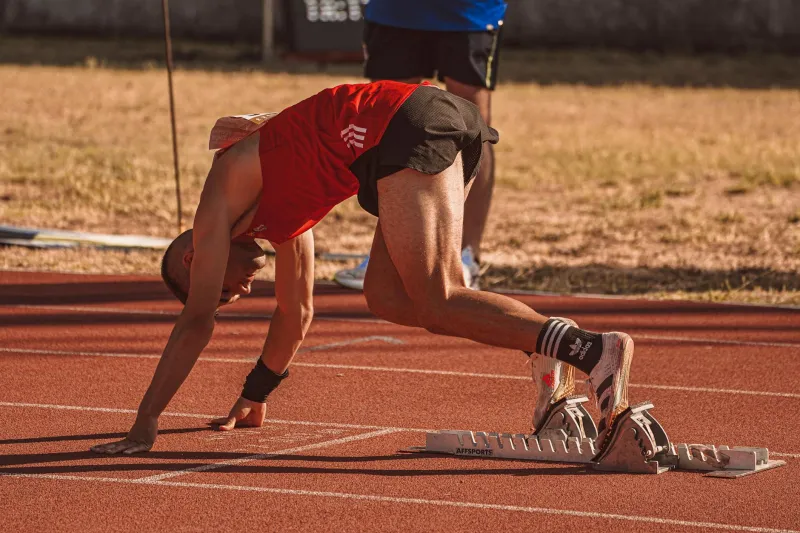
In April 1896, 241 athletes gathered in Athens for the first modern Olympic Games. They were the best their nations had to offer — selected to represent 14 countries in a competition that was, by any measure, the most ambitious international sporting event the world had ever seen.
Their performances were celebrated as the outer edge of human possibility.
Today, those same performances are being matched or exceeded by high school juniors in the American Midwest.
That's not a knock on the 1896 Olympians. It's a window into one of the most dramatic stories in sports history: how systematically, and how completely, the baseline of human athletic performance has shifted over the past 130 years.
The Numbers That Put It in Perspective
Let's start with the sprint, the most elemental athletic event there is.
Thomas Burke of the United States won the 100-meter dash at the 1896 Athens Games in a time of 12.0 seconds. That was the fastest 100 meters ever run at an Olympic Games. It was, at that moment, a world-class performance.
The current National Federation of State High School Associations (NFHS) standard for qualifying for a state championship meet in the 100-meter dash varies by state, but in competitive states like Texas and California, athletes routinely need to run under 10.8 or even 10.6 seconds just to advance past regional competition. The national high school record stands at 9.98 seconds, set by Matthew Boling of Georgia in 2019.
To put it plainly: a high school sprinter in 2024 who runs 11.5 seconds — a time that would not win a regional qualifying meet in most states — would have taken the gold medal in Athens.
The Long Jump: A High School P.E. Class Could Medal
The long jump at the 1896 Olympics was won by Ellery Clark, also of the United States, with a mark of 6.35 meters — just under 20 feet, 10 inches.
That is an excellent jump. Clark was a genuinely talented athlete. But the current average qualifying standard for the NCAA Division I long jump is around 7.60 meters for men. The average Division I competitor — not the national champion, the average qualifier — is clearing nearly 1.25 meters more than the 1896 Olympic gold medalist.
At the high school level, athletes regularly post marks in the 22- to 23-foot range, which translates to roughly 6.7 to 7.0 meters. A solid high school long jumper would have finished comfortably in the medals at Athens.
Shot Put: Where Things Get Even More Dramatic
Robert Garrett of Princeton University won the shot put at the 1896 Games with a throw of 11.22 meters — about 36 feet, 9 inches. Garrett was, by all accounts, a powerful athlete competing with equipment he'd barely trained with (he'd practiced with a heavier, differently shaped implement and only threw the standard shot for the first time at the competition itself).
The current NFHS shot put record for high school boys is over 77 feet — more than 23 meters. That's more than double the 1896 Olympic winning mark. Even a moderately competitive high school shot putter in a strong track-and-field state would have lapped the field in Athens.
Why Did Performance Improve So Dramatically?
The gap between 1896 and today isn't primarily about talent. Human genetics haven't changed that much in 130 years. What changed is everything around the athlete.
Training science. The 1896 Olympians trained largely by instinct and tradition. There was no periodization, no understanding of progressive overload, no concept of recovery protocols. Modern athletes follow training systems built on decades of biomechanical research, physiological testing, and data analysis.
Nutrition. Protein timing, carbohydrate loading, hydration science, and supplementation didn't exist in any meaningful form in 1896. Athletes ate what was available and what their coaches guessed might help. Today's competitors follow nutrition plans designed by sports dietitians working from clinical research.
Equipment and facilities. The 1896 long jump was performed off a dirt runway. Modern athletes train on engineered surfaces, wear shoes designed with carbon plates and energy-return foam, and have access to facilities purpose-built for their events. The improvement in equipment alone accounts for a measurable percentage of the performance gap.
Global competition and specialization. In 1896, the pool of athletes competing at the Olympic level was tiny — largely wealthy Western men who had the leisure time to train. Today, the global competitive pool numbers in the hundreds of millions, filtered through a system of high school, college, and professional competition that identifies and develops talent at a scale the 1896 organizers couldn't have imagined.
Sports medicine and injury prevention. Athletes in 1896 competed through injuries, recovered without structured rehabilitation, and had no access to the physical therapy, imaging technology, or surgical interventions that keep modern athletes competing at peak levels for longer careers.
What This Doesn't Mean
It would be a mistake to read these numbers as evidence that the 1896 Olympians were somehow unimpressive. They were extraordinary athletes for their time, training with the knowledge and resources available to them, competing at the absolute frontier of what was understood about human performance.
The 1896 Games also drew an uneven competitive field — many of the world's best potential athletes never had the opportunity to compete, due to geography, economics, and the exclusions that defined sport in that era. The performances recorded in Athens don't represent the full ceiling of human athletic potential in 1896. They represent what was achievable under the specific, limited conditions of that moment.
The Real Story Is the Infrastructure
What the numbers actually reveal is less about individual athletes and more about systems. The United States has built, over the past century-plus, one of the most sophisticated athletic development ecosystems in the world — from youth recreation leagues to high school sports programs, from Division I college athletics to the Olympic Training Centers run by the USOC.
When a high school sophomore in Ohio runs a 100 meters in 11.2 seconds, they're not just fast. They're the product of youth coaching, quality track facilities, decent nutrition, access to sports medicine when they get hurt, and a competitive structure that has been systematically refined over generations.
The 1896 Olympians stood at the starting line of the modern era. The athletes who came after them didn't just run faster — they ran on a completely different track, built by 130 years of investment in the science and infrastructure of sport.
From Olympia to Athens to your local high school invitational, every record has a starting line. In 1896, we were just finding our footing.